



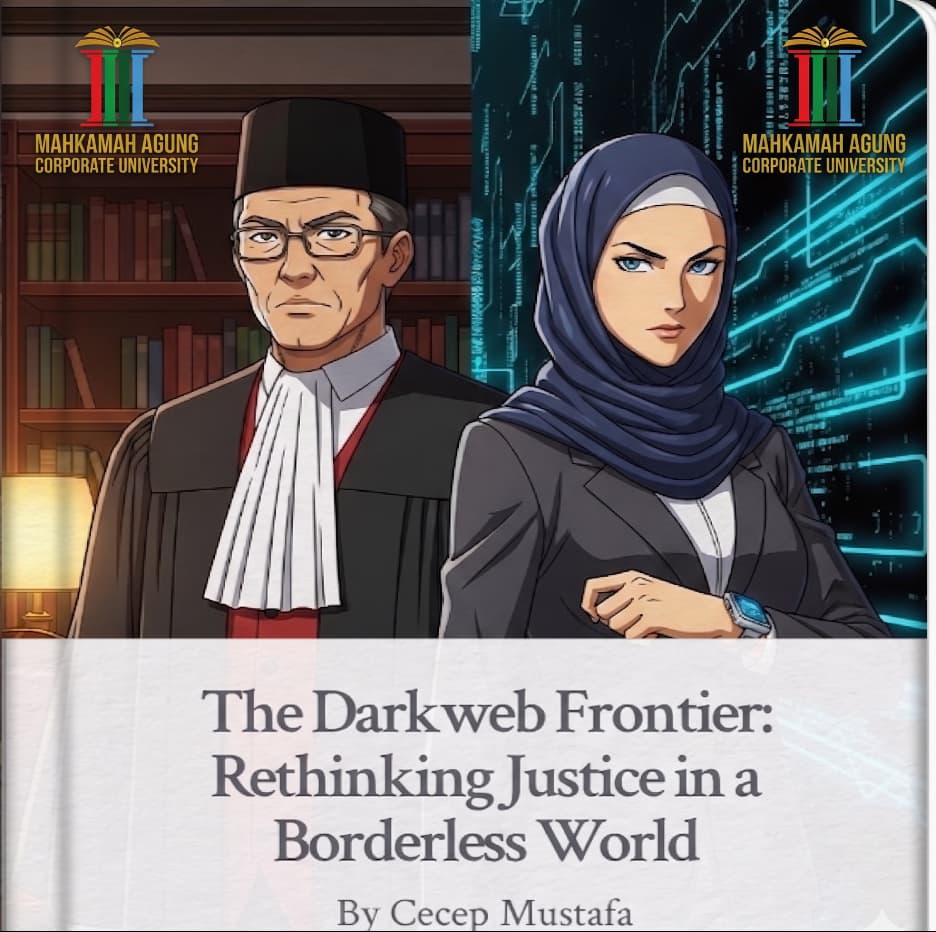
There was a time, not too long ago, when crime felt tangible. It moved along roads, across borders, through ports and checkpoints. Judges could imagine it. Investigators could trace it. Laws, though imperfect, had something solid to grasp onto.
But today, that certainty feels almost nostalgic.
As we turn our attention to transnational trafficking, whether of persons, drugs, arms, or the deeply disturbing rise of cyber sex exploitation, we are no longer dealing with crimes that simply cross borders. We are confronting crimes that barely recognize borders at all. The emergence of the darkweb, particularly networks like Tor, has not just complicated crime; it has redefined it.
And perhaps that is where our discomfort begins.
Because what does justice look like in a space where identity is masked, geography is irrelevant, and transactions happen in currencies that exist only as encrypted code?
When Crime Evolves Faster Than Law
Listening to discussions on drug and arms trafficking today, one cannot help but notice a subtle irony. Our legal systems are, in many ways, robust, carefully constructed frameworks with strong penalties and clear doctrines. Indonesia’s narcotics and arms laws, for instance, reflect a serious and commendable commitment to controlling these threats.
And yet, there is a quiet mismatch.
While the law remains rooted in territory, crime has moved into spaces without territory. When a drug transaction is negotiated through encrypted messaging, paid via cryptocurrency, and delivered through fragmented international routes, where exactly does jurisdiction begin, or end?
It is a bit like trying to catch smoke with your hands. The effort is sincere, but the object itself resists containment.
This is not a failure of law. It is a reminder that law, like society, must evolve, or risk becoming symbolic rather than effective.
The Human Cost Behind Legal Language
If the technical challenges of drug and arms trafficking stretch our legal imagination, human trafficking challenges something deeper, our moral clarity.
On paper, trafficking appears structured, a process of recruitment, transport, and exploitation. But in reality, it is far messier. It exists in grey zones.
One of the more uncomfortable truths emerging from modern criminology is that the line between victim and perpetrator is not always clean. A recruiter today may have been a victim yesterday. Coercion, survival, and manipulation often intertwine in ways that resist simple judgment.
This raises difficult questions for judges. How do we assign responsibility in a system where agency itself is compromised? Can justice remain just if it ignores context?
Indonesia’s legal framework, with its emphasis on victim protection and rehabilitation, offers a thoughtful starting point. But even the best laws depend on interpretation, and interpretation depends on empathy as much as logic.
The Darkest Corner: When Exploitation Goes Digital
And then, there is the part of this conversation that is hardest to confront.
Cyber sex trafficking and online child exploitation represent not just a legal crisis, but a moral one. The anonymity promised by the darkweb has enabled a form of exploitation that is both global and disturbingly intimate. Abuse is no longer confined to a location. It can be streamed, shared, replicated, and consumed across continents in real time.
It forces us to confront an unsettling reality. Technology, which we often celebrate as a tool of progress, can just as easily become an instrument of harm when left unchecked.
What makes this even more challenging is the nature of digital evidence itself. Unlike physical evidence, it is fragile, duplicable, and often deliberately obscured. Judges are now expected to navigate complex forensic trails, chains of custody that exist not in lockers, but in servers scattered across hidden networks.
In such cases, justice demands not only legal expertise, but technological literacy.
A Borderless Problem Requires a Borderless Response
If there is one unifying lesson across all these issues, it is this. Crime has globalized faster than justice.
Criminal networks collaborate across borders effortlessly, exploiting gaps between jurisdictions. Meanwhile, our responses often remain confined within national frameworks, limited by bureaucracy, sovereignty concerns, and differing legal standards.
This imbalance is not sustainable.
True progress will require more than stronger laws. It will demand cooperation, real, functional, and continuous cooperation between nations. It will require shared intelligence, harmonized regulations on digital assets, and investment in forensic capabilities that match the sophistication of modern crime.
In other words, justice must learn to move as fluidly as the crimes it seeks to address.
A Final Reflection
Perhaps the greatest challenge before us is not technical, but philosophical.
What does it mean to deliver justice in a world where crime is invisible, victims are global, and perpetrators hide behind layers of code?
The answer, I suspect, lies not in abandoning our legal traditions, but in rethinking them. Law must remain principled, but it must also become adaptive. Judges must remain impartial, but also deeply aware of evolving realities.
Because at the heart of all these discussions, beyond statutes, beyond technology, are human lives.
And justice, if it is to mean anything at all, must keep them at its center.

Untuk Mendapatkan Berita Terbaru Suara BSDK, Follow Channel WhatsApp: SUARABSDKMARI