



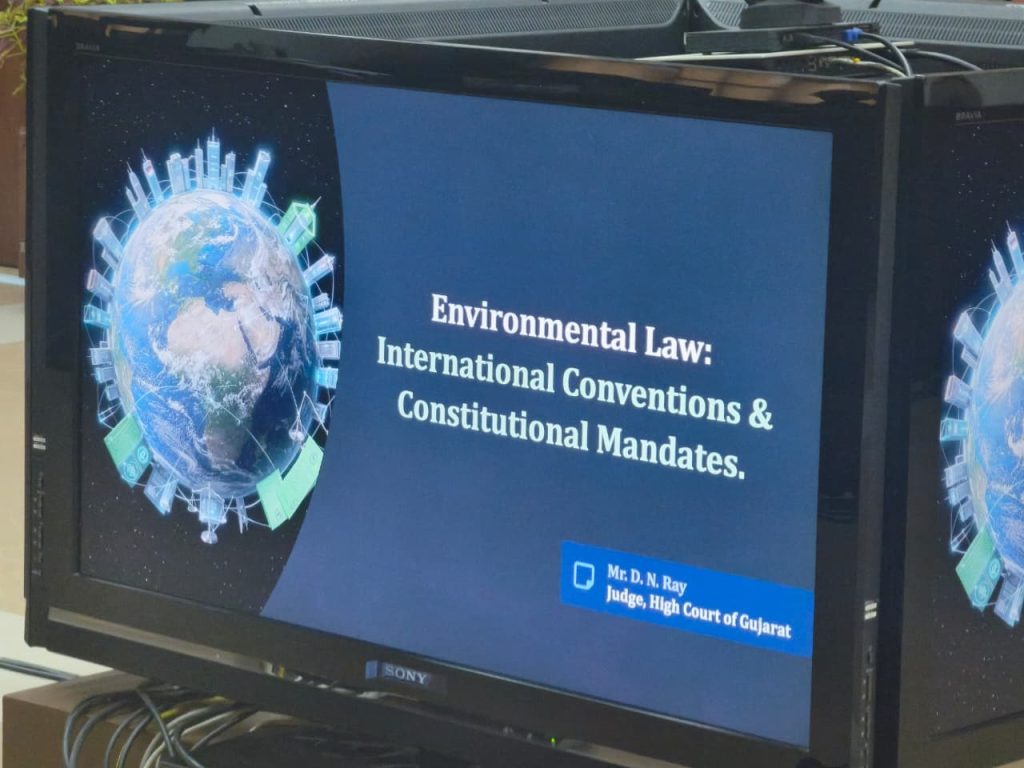
I. The Implementation of International Conventions on Environmental Law as a Constitutional Mandate: Key Provisions under Indonesian and Indian Constitutions
- The Historical Outline of Significant International Environmental Agreements
The presentation of natural resources and the effects of pollution on the environment and human health were the two main topics of discussion when international agreements on ecological concerns first emerged in the second half of the 20th century. In this sense, efforts were made by the international community to govern and regulate the unrestricted use of marine resources. For instance, the 1946 “International Convention for the Regulation of Whaling” is regarded as the first international agreement pertaining to environmental preservation. But their efforts were unsuccessful. Evidence of widespread marine, atmospheric, and sea pollution emerged during the post-World War II global economic recovery. Since then, the scope of international environmental agreements has significantly increased due to ecological challenges becoming transboundary, as demonstrated by the growing number of worldwide initiatives. International bodies such as the United Nations supported the emergence of environmental conferences and agreements. In this regard, early international environmental agreements concentrated on a relatively small number of concerns and problems, but more recent agreements address a wider variety of issues and are binding on a larger number of governments than previous ones. However, the unveiling of significant worldwide environmental agreements occurred during the Stockholm Conference in 1972. The historical outline of significant international environmental agreements that address a range of ecological challenges is provided as follows: 1- Stockholm Conference (UNCHE, 1972)
The Stockholm Declaration is a significant environmental manifesto that shapes an ethical code meant to direct and impact future national and international programmes. The Declaration is made up of twenty-six shared principles that are intended to motivate and direct future activities and policies, especially those related to the human environment. - United Nations Environment Programme (UNEP)
The General Assembly established this international environmental organisation in December 1972 with the primary goal of coordinating environmental initiatives inside the UN system. UNEP was dubbed the “environmental conscience of the UN system” and has its headquarters in Nairobi, Kenya. This organisation’s primary responsibilities encompass promoting international collaboration on ecological concerns, directing other UN environmental agencies, coordinating UN environmental activities, monitoring global environmental management, and supporting scientific research and initiatives, among other things. Additionally, it aims to increase public knowledge of the risks associated with environmental degradation and change. Educate people about the environment through sponsored radio and television shows. - Montreal Protocol (1987)
This international agreement, the first of its type in environmental protection history, aims to preserve the stratospheric ozone layer by lowering the production, emissions, and use of chemicals that deplete the ozone layer globally within the allotted time frame. - Rio Conference (1992)
Numerous environmental issues, including biodiversity, climate change, pollution, forest management, poverty, and sustainable resource use, were negotiated at the meeting. However, the conference’s main goal was to build a sustainable model of development that would balance the need for environmental protection with global developmental ambitions. The broad definition of sustainable development is “development that meets the needs of the present generation without compromising the ability of future generations to meet their needs”. As a result, the conference established guidelines or a plan of action to help people and countries embrace more ecologically friendly practices. Additionally, the participants ostensibly pledged to advance industrialisation and growth in balance with the environment. The principal agreements and documents signed during the conference were the Declaration on Environment and Development, the Convention on Biological Diversity, the United Nations Framework Convention on Climate Change, the Statement of Principles for the Sustainable Management of Forests, and Agenda 21. - Paris Agreement (2015)
The Agreement represents yet another significant effort to improve UN Framework Convention on Climate Change (UNFCCC) implementation. It provides a new, worldwide, legally binding framework to fight the threat posed by climate change and bolster international cooperation in the pursuit of a sustainable future after 2020. In other words, the Paris Climate Agreement is anticipated to replace the Kyoto Protocol’s second commitment term, which expires in January 2020.
- Stockholm Conference (UNCHE, 1972)
- The Implementation of International Conventions on Environmental Law as a Constitutional Mandate in the Indonesian and Indian Constitutions
- Indonesia
The regulation of environmental law provisions is fully incorporated in the 1945 Constitution of the Republic of Indonesia. Article 28A regarding the right to life regulates that everyone has the right to live and to protect their lives.
Article 28H, paragraph (1) of the Indonesian Constitution pertains to the right to wellbeing, stating that every person has the right to live in physical and spiritual prosperity, to have a home, to enjoy a good and healthy environment, and to obtain medical care.
Article 33, paragraph (3), concerning state control of resources, states that the land, waters, and natural resources shall be under the authority of the state and used for the greatest benefit of the people and article 33, paragraph (4), which addresses economic democracy, states that the national economy shall be conducted based on the principles of economic democracy, including togetherness, efficiency with justice, continuity, and an environmental perspective. 2 - India
The Indian judiciary has virtually single-handedly transformed environmental legislation and governance in the nation during the past thirty years. It has rendered historic rulings on a wide range of environmental issues, including industrial pollution, waste disposal, exploitative mining, uncontrolled deforestation, toxic car emissions, and widespread poaching. Apathetic executive agencies have been forced to take action by it, leading to the implementation of stricter regulations and enforcement measures to address environmental degradation. The judiciary’s interventions, which are sometimes condemned for jurisdictional overreach, have highlighted the unexplained costs of economic growth and development as well as the unfair distribution of these costs, particularly affecting marginalised communities and ecosystems that bear the brunt of environmental degradation. Through its rulings, it has determined that protecting the environment and upholding people’s rights to it are mandated by the constitution in conjunction with pertinent legislative requirements. In addition, it has produced a set of legal precepts that are widely used in environmental litigation and constitute an essential component of Indian environmental law.3
In the international arena, the influence of international environmental law on India’s constitutional provisions pertaining to sustainable development and environmental preservation is becoming more and more significant. As one of the most populous and environmentally diverse countries in the world, India has a vested interest in ensuring that its environmental laws and policies align with international standards and best practices. The Indian Constitution is numbered with clauses pertaining to sustainable development and environmental preservation. While article 51A paragraph (g) puts a fundamental duty on every person to conserve and develop the natural environment, Article 48A of the Constitution directs the state to protect and improve the environment and safeguard forests and wildlife. The Constitution gives the federal and state governments the power to make laws to protect and improve the environment. Article 21 says that everyone has the right to life and personal freedom, and the courts have recognised the right to a healthy environment as a basic right.4
Since it was the first to specifically incorporate environmental protection into the constitutional structure, the 42nd Amendment Act of 1976 is frequently referred to as the “Green Amendment” or the start of the “Green Constitution” in India. ” “Socialist” was introduced by the 42nd Amendment, which upheld a welfare state dedicated to social justice. According to this theory, social interests-like environmental preservation-take precedence over personal or special interests.
The Indian Constitution’s Article 14 guarantees everyone the right to equality without exception. All people are guaranteed the freedom to practise any profession or to carry on any occupation, trade or business under Article 19 paragraph (1) sub-paragraph (g).
The citizens’ rights are not unqualified. Article 19 paragraph (6) allows for the imposition of “reasonable restrictions” in the “interest of the general public”. Therefore, it is possible to safeguard environmental interests from the risks associated with any trade or enterprise, ensuring that such restrictions can prevent harmful practices that may endanger public health and the environment. “Industries cannot profit at the expense of public health.”
The right to life and personal liberty is guaranteed by Article 21 of the Indian Constitution. “No person shall be deprived of his life or personal liberty except according to procedure established by law,” it declares. Article 21 of the Constitution’s definition of “life” does not refer to a life of constant drudgery or animal existence. It encompasses a far broader range of rights, such as the right to a clean and pollution-free environment, the right to a higher standard of living, and hygienic circumstances at work and during leisure. The right to live with dignity includes some of the finer aspects of human civilisation that make life worthwhile.
Article 48A governs the enhancement and protection of the environment, as well as the preservation of forests and wildlife. In addition to improving and safeguarding the environment, the state will strive to maintain the country’s forests and animals. This includes the preservation of forests and wildlife, along with the enhancement and protection of the environment. The state will work to preserve the nation’s forests, wildlife, and ecology.
Article 51A regulates fundamental duties that every Indian citizen has an obligation to (g) safeguard and enhance the natural environment, which includes forests, lakes, rivers, and wildlife; and to show compassion for all living things.5
- Indonesia
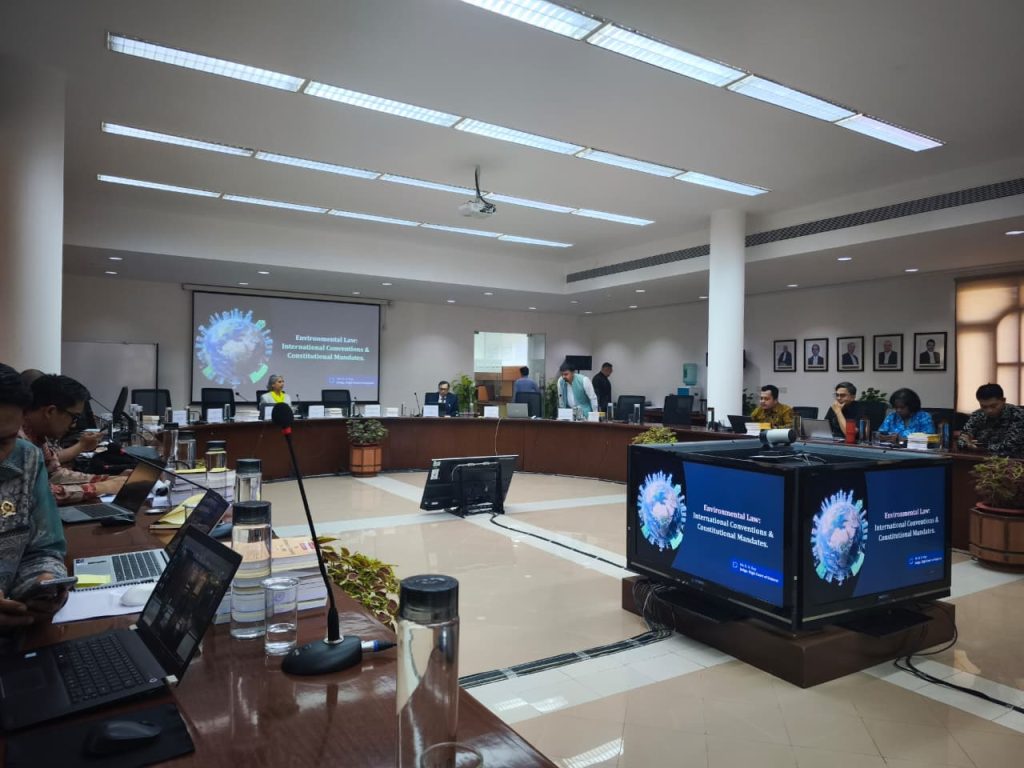
II. Role of Judiciary in Developing Environmental Jurisprudence
The adoption of Law Number 4 of 1982 about the Basic Provisions of Environmental Management (LN 1982 No. 12, TLN No. 3215), also known as UULH, marked the beginning of Indonesia’s history of comprehensive environmental law regulation, or what is known as ‘environment-orientated law’. Later, Law Number 23 of 1997 concerning Environmental Management (LN 1997 No. 12, TLN No. 3215), also known as UUPLH, took its place. More recently, Law Number 32 of 2009 concerning the Protection and Management of the Environment (EMA) (LN 2009 No. 140, TLN No. 5059), also known as UUPPLH, has taken its place. The Indonesian Environmental Law (EMA), amended by Law Number 6 of 2023, which enacted government regulations in lieu of Law Number 2 of 2022 on job creation, is separated into 17 chapters and 127 articles, and it presents a number of new ideas and clauses that the two earlier Acts did not address. Furthermore, EMA 2009 aims to harmonise and consolidate the environmental management responsibilities of federal, provincial, and local governments.6
The Environment (Protection) Act, 1986 is key legislation in India enacted to implement the decisions of the United Nations Conference on the Human Environment (Stockholm, 1972). It serves as the umbrella framework for environmental regulation in India.
The Environmental Laws of Indonesia and India are strikingly similar largely because both countries are populous developing countries that balance rapid economic growth with rich biodiversity and climate responsibilities.
Important parallels between their legal systems include:
- Constitutional Environmental Rights.
Both countries have integrated environmental protection into their constitutions. - Adoption of International Principles
The Rio Declaration’s fundamental worldwide environmental principles have been enshrined in both legal systems, including :- Principle of Sustainable Development
A fundamental standard based on intergenerational equality that mandates economic development be balanced with environmental preservation in order to meet current developmental requirements without jeopardising the ecological integrity and resource base for future generations. - Doctrine of Polluter Pays
To restore ecological balance and discourage further infractions, a law of rigorous financial accountability would require the polluter to internalise all costs associated with environmental harm, including prevention, mitigation, restoration, and compensation. - Doctrine of Proportionality
A judicial assessment criterion requires that environmental limitations or actions (least restrictive) serve a legitimate goal, be rationally related to that goal, and maintain a proper balance between environmental protection and conflicting rights and interests. - Doctrine of Public Trust
A constitutional restriction on the State’s authority stipulates that the State is responsible for specific natural resources, which must be safeguarded, conserved, and not exploited or alienated in ways that could harm the public interest. - Doctrine of Precautionary Principle
A standard of anticipatory governance that requires the proponent to prove environmental benignity in cases where an activity poses a genuine risk of substantial or irreversible environmental harm and that scientific uncertainty cannot be used as an excuse for inaction. - Doctrine of Strict Liability
Every person whose actions, efforts, and activities use hazardous materials (B3), produce and manage B3 waste, and pose a serious threat to the environment is absolutely responsible for any resulting losses without the need to prove any element of fault.7
- Principle of Sustainable Development
- Environmental Impact Assessment (EIA) Processes
EIA systems-known as AMDAL (Environmental Impact Assessment) in Indonesia-are used in both nations to assess how development projects would affect the environment. They also deal with similar issues, like scientific disagreements in EIA reports that could lead to legal action. - Judicial Activism and Litigation
In terms of environmental governance, both judiciaries are proactive. Public Interest Litigation (PIL), which enables citizens to petition courts for environmental justice, is a well-known practice in India. Similar “citizen lawsuit” procedures and an “Environmental Judges Certification System” are in place in Indonesia to guarantee expert handling of eco-cases. - Climate and Renewable Energy Commitments
Both have committed to reducing carbon emissions as signatories to the Paris Agreement. While both nations rely mostly on fossil fuels to supply their energy needs, they struggle with inadequate regulatory frameworks for renewable energy. - Forestry and Community Management
Both legal systems acknowledge the importance of local or customary law (Adat)8 communities in the management of natural resources and place a strong emphasis on sustainable forest management.
The differences in the application of environmental law principles between Indonesia and India are as follows:
- The Indian Environmental Protection Act regulates the Doctrine of Continuing Mandamus
Doctrine of Continuing Mandamus is a public law procedural innovation that allows courts to maintain jurisdiction over environmental matters by issuing consecutive, compliance-focused directives and overseeing implementation until they achieve complete and effective enforcement. - While Indonesia applies Strict Liability (Article 88 of Law Number 32 of 2009) for activities involving hazardous waste (B3), Indian jurisprudence (the M.C. Mehta vs Union of India / Oleum Gas Leak case) developed the even more stringent Absolute Liability, a principle of no-fault, non-derogable liability, which reflects the increased obligation owed to the community and states that a business that engages in hazardous or intrinsically risky operations is fully accountable for any resulting injury, without any exceptions.9
III. Conclusion
Both Indonesia and India, as part of the international community, have a strong commitment to preserving, maintaining, and enhancing the quality of the environment, regardless of the differences in their legal applications, including the enforcement of laws in accordance with international environmental law principles.
Referensi
[1] Nirmal Jindal and Kamal Kumar, “Ecological Issues: Historical Overview of International Environmental Agreements, Climate Change & Global Commons Debate”, in Global Politics: Issues and Perspectives, SAGE Publications, 2018, pp. 137-173, (ISBN: 978-93-528-0683-6).
[2] D.N Ray, Environmental Law : International Conventional Constitutional Mandates, Lecture at Training Program for Judges from Republic of Indonesia (SE-26), 24th-28th April, 2026, National Judicial Academy (NJA) Bhopal, India.
[3] Lovleen Bhullar, The Judiciary and the Right to environment in India: Past, Present and Future in Shibani Ghosh, Indian Environmental Law : Key Concepts and Principles, 2019, p.21, available at https://cprindia.org/wp-content/uploads/2022/12/Indian-Environmental- Law_Key-Concepts-and-Principles.pdf.
[4] Navdeep Kaur, “The Impact of International Environmental Law on Constitutional Provisions of India Related to Environmental Protection and Sustainable Development”, available at https://dx.doi.org/10.2139/ssrn.4697849
[5] Aishwarya Bhati, Environmental Law : Global Challenges and Judicial Role, Lecture at Training Program for Judges from Republic of Indonesia (SE-26), 24th-28th April, 2026, National Judicial Academy (NJA) Bhopal, India.
[6] Laode M.Syarif, “Current Development of Indonesian Environmental Law,” e-Journal of IUCN Academy of Environmental Law, Number 1, Issue 20, available at https://www.iucnael.org/en/documents/485-indonesia-laode-syarif/file
[7] Aishwarya Bhati, supra note 5.
[8] Indonesian Constitutional Court Decision Number 35/PUU-X/2012 concerning Customary Forests as State Forests, available at https://www.mkri.id/public/content/persidangan/sinopsis/ikhtisar_1047_1271_35-PUU-X- 2012-ok.pdf
[9] Aishwarya Bhati, supra note 5.

Untuk Mendapatkan Berita Terbaru Suara BSDK, Follow Channel WhatsApp: SUARABSDKMARI