




What I find most interesting about Japan’s approach to dispute resolution is not simply how cases are decided, but how disputes are given an opportunity to be resolved before a judgment becomes the only available path.
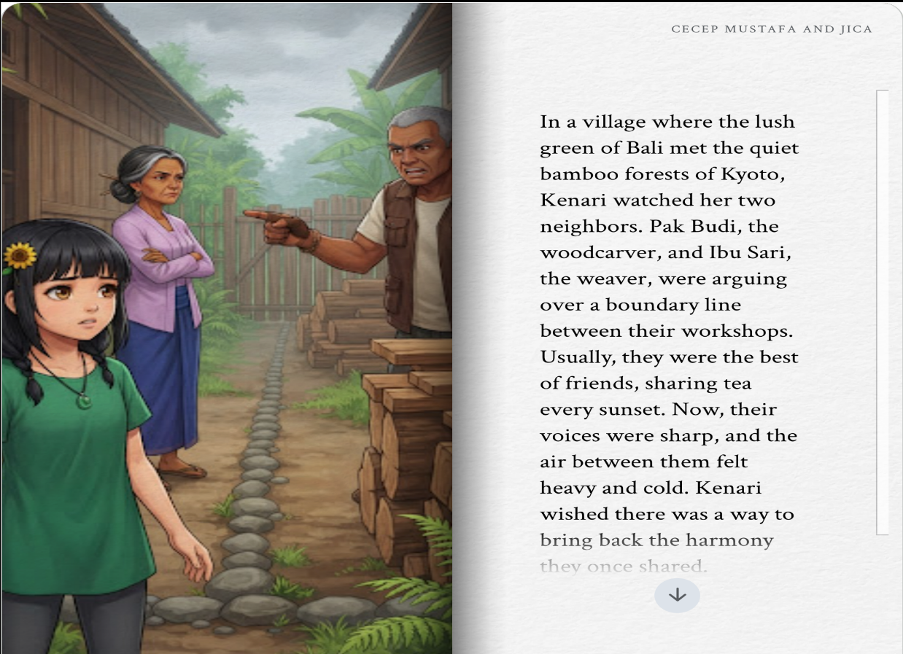
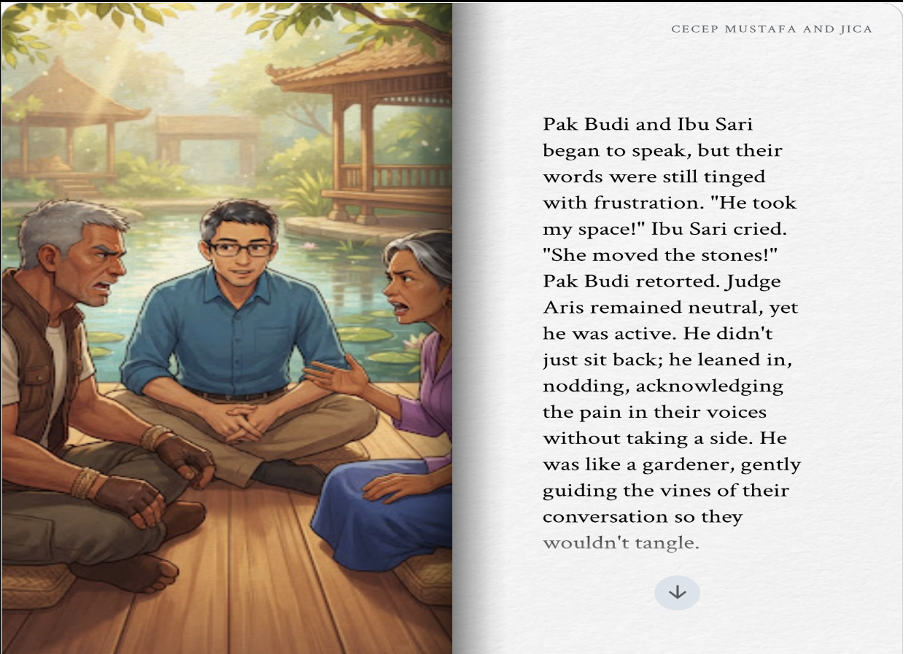
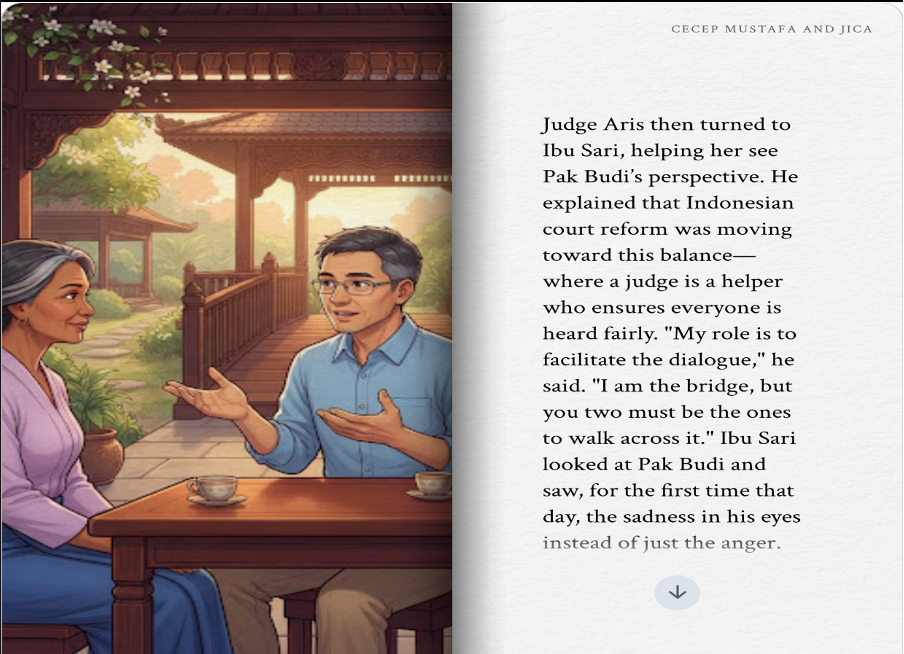
In the Chōtei process, I observed that judges and lay judges do not always have to appear as figures standing above the parties. They can instead become facilitators who help the parties rediscover a space in which they can speak to one another. Dispute resolution, in this sense, is not merely a question of determining who is right and who is wrong. It is also about asking how social relationships can be preserved after conflict has occurred.
There is something simple about this, yet perhaps precisely because it is so simple, we often forget it: people who come to court do not bring documents alone. They bring disappointment, a sense of having been wronged or misunderstood, economic interests, and sometimes relationships that have been built over many years. When social conflict is too quickly transformed into a purely legal battle, the process can sometimes take us further away from resolution rather than closer to it.
My experience of observing Chōtei made me look at international arbitration and mediation from a somewhat different perspective.
When Place Helps People Make Peace
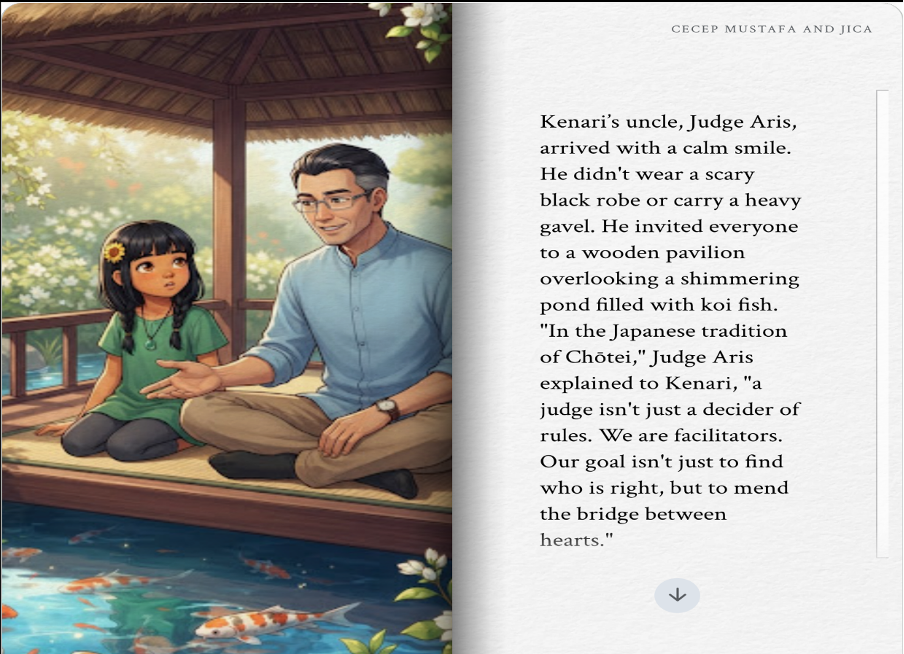
In international arbitration and mediation, the location is not always merely a backdrop. Legal practitioners and mediators based in Hawaii, for example, often find that parties are willing to travel there for mediation. A more relaxed atmosphere, away from the routines of the office and the tensions of business relationships, may create a different psychological space for dialogue.
Of course, we cannot say that a beach automatically makes people more willing to settle. A major commercial dispute remains a major commercial dispute, even when the mediation table overlooks the ocean.
Yet the phenomenon is interesting because it reminds us that the social and physical environment can influence legal behavior.
Something similar can be observed in places such as California and Kyoto. In Kyoto, the Chōtei process suggests that a dispute-resolution space can be designed not merely to bring competing arguments together, but also to allow communication to take place in a more humane way.
This raises an interesting question for Indonesia: does the character of the court environment influence the success of mediation?
Indonesia has Bali, Lombok, Ambon, and many other coastal regions. This certainly does not mean that courts should be moved to the beach in order to make mediation successful. But perhaps we should begin to examine whether the design of the room, the atmosphere, accessibility for the parties, and the surrounding environment have any relationship with mediation outcomes.
Perhaps we have spent too much time discussing procedural law and too little time thinking about the human beings who have to live through that procedure.
Judges, Arbitrators, and the Boundaries of Neutrality
Differences between legal traditions offer another important lesson.
In the Anglo-American tradition, mediators or adjudicators may sometimes operate within a more adversarial framework. In some settings, a mediator may appear almost like a decision-maker, while in others the mediator may be extremely cautious, limiting the role to summarizing what the parties themselves have presented.
The Civil Law tradition presents a somewhat different dilemma. What happens when an arbitrator identifies a legal issue that is clearly relevant but has not been adequately addressed by the parties?
This is where the tension between neutrality and the quality of adjudication becomes visible.
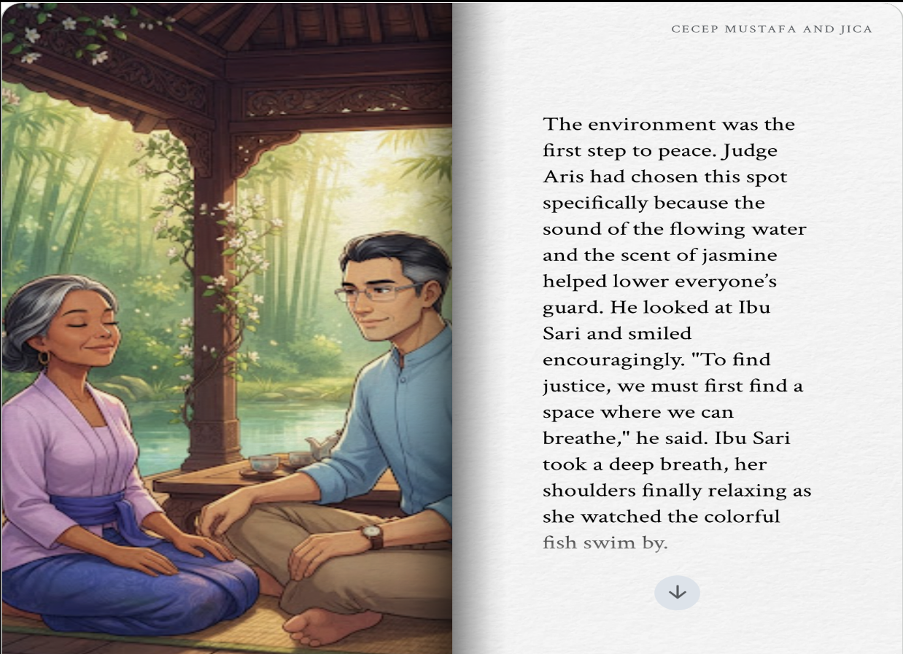
An arbitrator should not become an adviser to one of the parties. But neutrality does not necessarily mean passivity. Within the limits permitted by procedural rules, an arbitrator may seek clarification or encourage the parties to provide additional evidence so that a relevant issue can be examined properly.
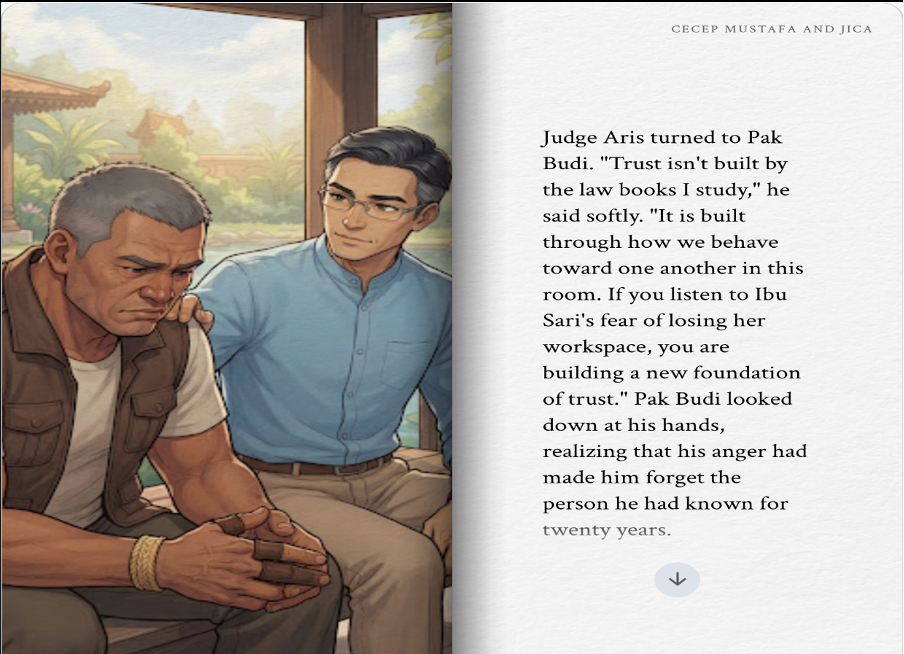
The Japanese experience of Wakai and Chōtei offers an interesting perspective here. Public trust in judges allows dispute resolution to derive legitimacy from something more than the formal authority to decide. Judges can earn trust precisely because the parties see that the purpose of the process is not simply to produce a winner and a loser, but to search for a resolution that the parties can accept.
This is where I see an important distinction between authority and trust.
Authority can be conferred by law.
Trust cannot be conferred by an article of legislation.
Trust must be built through institutional behavior, the quality of communication, consistency of procedure, and people’s experiences when they encounter the court.
Arbitration: When Finality Must Be Matched by Procedural Certainty
The Japanese approach to arbitration also offers an important lesson about the relationship between finality and judicial supervision.
In principle, the enforcement of an arbitral award operates through a simpler mechanism than the enforcement of a foreign court judgment, which may require recognition or a separate proceeding before a Japanese court.
At the same time, the setting aside of an arbitral award within the framework of the New York Convention is fundamentally concerned with serious procedural defects rather than providing an opportunity for the court to reconsider the merits of the dispute as if the arbitration had never taken place.
This principle matters for the design of dispute-resolution systems: an alternative mechanism loses much of its meaning if, after the process is completed, the parties must simply repeat the entire dispute in another forum.
Arbitration needs finality.
But finality requires a procedure that people can trust.
Judicial supervision should therefore function as a safety valve, rather than as a back door through which the substantive merits of the case are effectively reheard.
From Experience to Reform of Indonesian Civil Procedure
These observations lead to a more practical question: what can we adapt to Indonesian civil procedure?
I see several directions that could be considered in the development of a RaPerMA.
First, the Pre-Trial Case Management Conference should be strengthened as a genuine case-management mechanism. Judges should not merely determine the date of the next hearing. Together with counsel, they should identify the issues, determine the stages of evidence, establish a case calendar, and actively manage the progress of the case.
Second, the exchange of documents needs greater discipline. The complaint, answer, reply, and rejoinder should not develop into an endless exchange of written submissions. Relevant documentary evidence and written witness statements could be submitted at an early stage so that hearings can focus on the issues that are genuinely disputed.
Third, we need to take time management more seriously. A chess-clock system, for example, offers a simple idea: courtroom time is a shared institutional resource. If each party is given clear limits for witness examination, submissions, and responses, proceedings can become more disciplined without diminishing the right to be heard.
Fourth, digital court technology should not be viewed merely as a solution for situations in which someone cannot appear physically. It can become part of the procedural architecture itself.
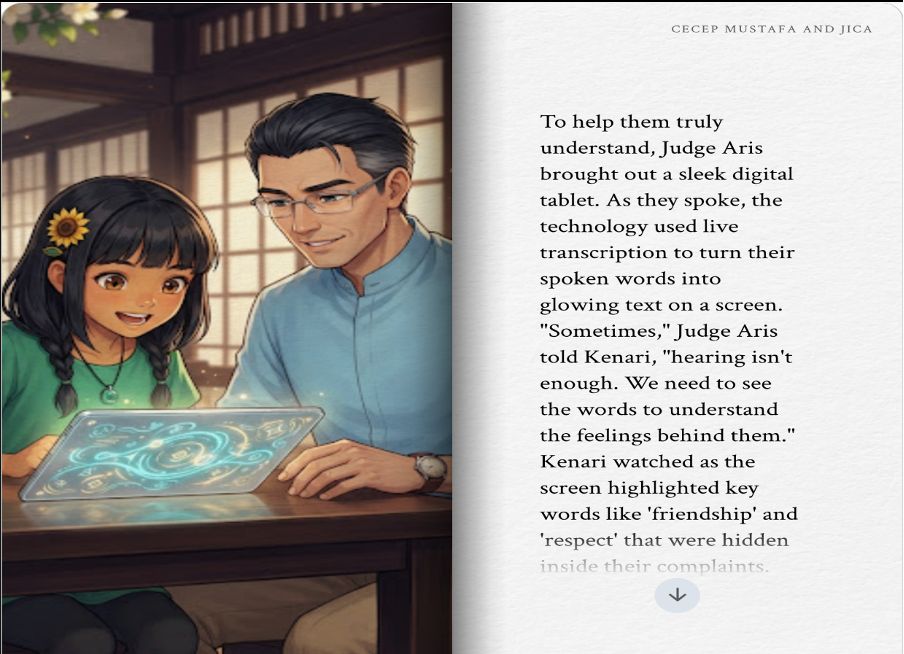
Real-time transcription, remote witness examination, digital evidence management, and searchable hearing records can help judges maintain continuity in their understanding of a case.
Ultimately, good technology is not technology that merely makes a court look modern. Good technology is technology that makes proceedings easier to trace, more accountable, and easier for the people who use them to understand.
Affordable Technology Does Not Mean Careless Technology
This is where the use of open-source technology becomes particularly interesting.
For remote witness examination, platforms such as Jitsi Meet and BigBlueButton demonstrate that courts do not necessarily have to depend on expensive commercial platforms. They can be developed or self-hosted, allowing institutions greater control over their infrastructure and data.
For transcription and courtroom note-taking, approaches such as CaseMark Court Transcriber, Thurgood, Meeting Scribe, Kuali, and speaker-diarization models such as rd-diarization point toward another possibility: a hearing record does not have to remain simply as an audio or video file stored on a server.
It can become searchable, traceable, and analyzable legal knowledge.
Imagine a judge returning to an old case several years later. Instead of watching hours of recorded proceedings simply to locate one important piece of testimony, the judge could search for a witness’s name, a particular issue, or a specific part of the examination, and then return to the original recording for verification.
At that point, technology does not replace the judge.
Technology helps the judge remember better.
From Chōtei Toward a More Humane Judiciary
Ultimately, the greatest lesson of Chōtei is not a particular procedure that can simply be copied and transplanted into Indonesia.
What matters more is the way of thinking behind it.
A judiciary does not always have to choose between legal firmness and a humane approach. The two can coexist. Judges can preserve neutrality without becoming passive. Courts can preserve legal certainty without losing empathy.
Technology should also be understood within the same framework.

We do not need technology simply because technology is fashionable. We need technology when it helps people do something that was previously difficult: listen more carefully, record more accurately, understand a case more quickly, and ultimately help the parties find a way forward.
Perhaps this is the simplest meaning of compassionate justice.
Justice does not always begin when the judge strikes the gavel.

Sometimes, justice begins when one person is given the opportunity to speak, another person genuinely listens, and the court creates enough space for both to discover the possibility of reconciliation.
That is where Chōtei offers a lesson that goes far beyond procedure.
It reminds us that a court is not only a place where conflicts are brought to an end. It can also be a place where people learn to approach conflict differently.

Untuk Mendapatkan Berita Terbaru Suara BSDK, Follow Channel WhatsApp: SUARABSDKMARI