



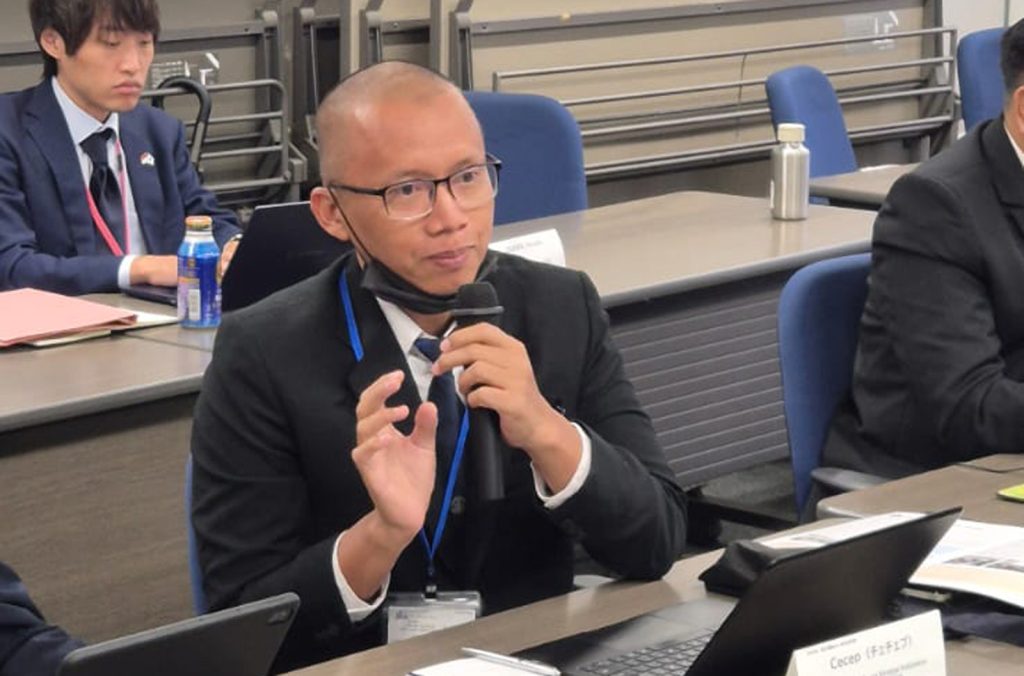
Imagine you are about to argue with your closest friend over who really owes whom for a trip you took together. If the conversation were being recorded, with every word binding forever, you would speak like a diplomat on the first day of a war: carefully, defensively, and saying nothing useful. Now imagine the same talk in a quiet kitchen, no recorder, no audience, just the two of you and a mediator who has read both sides. Suddenly you say, “Well, maybe I did forget to pay for the hotel.” Suddenly the dispute has a shape.
That, in essence, is what Japanese civil procedure has tried to build into its pre-trial stage. And I find it one of the more quietly philosophical ideas in modern litigation.
A Pipeline, Not a Battlefield
We tend to picture a lawsuit as a single dramatic event: robes, gavels, a witness sweating under cross-examination. The Japanese system, as Prof. Imazu describes it, is more like a pipeline with seven stages.
It begins with the complaint filed at the court registry, which is mere administrative docketing. Next comes an informal consultation in which the judge asks both sides how they would like to proceed. Then the First Hearing Day, held in open court, formally opens the case. From there, unless someone objects, the matter flows into Pre-Trial Proceedings, the heart of this essay. After that, the court reads out the formal result of the pre-trial in public, which locks in the scope of the trial. Then comes the substantive hearing with focused witness examination, and finally the verdict, pronounced in open court.
Notice the rhythm. Public, private, public, public. The system breathes in and out. The doors are open when the court speaks, and they close when the parties think.
The Room with the Door Shut
The pre-trial stage is closed to the public, and both parties must attend, in person or online. Some will hear “closed to the public” and flinch. Haven’t we been taught that justice must be seen to be done? Yes, and that is why the beginning and the end of the process, the opening and the result statement, remain fully open. But there is a quieter truth that every honest lawyer knows: people do not reason well while performing. A litigant on a public stage defends their image. A litigant in a closed room can finally ask, “What are we actually fighting about?”
The rule that both sides must be present matters just as much. It prevents the old vice of ex parte influence, where a judge hears one story in private and mistakes it for the whole. Presence means counter-arguments arrive instantly, like a tennis rally rather than two people mailing postcards to each other across a year.
The Judge Who Does Not Hide
Here is where the system gets interesting. The presiding judge, or an assigned panel member, leads the pre-trial personally. Japan abandoned the older arrangement of a separate “preparation judge” who handled the early stages and then handed the case to someone else, like a relay baton dropped in the mud. Continuity of control now sits with the judge who will actually decide.
That judge is active. The judge guides the timeline, trims trivial issues, and even discloses a tentative conviction, an early sense of where the case seems to be heading. For readers raised on the image of the silent, inscrutable judge, this can feel almost scandalous. Isn’t a judge supposed to keep their cards hidden?
I would argue the opposite. A judge who reveals a tentative view is like a doctor who says, “Based on what I see so far, this looks like X; tell me if I’m wrong.” That is not bias. It is transparency in service of correction. The parties can respond, adjust, or abandon weak positions before wasting years and fortunes on them. The old poker-faced judge protects the judge’s dignity, while the candid one protects the litigants’ time.
The Quiet Genius: The Non-Commitment Rule
Now to the feature I find most elegant: the Non-Commitment Rule.
During pre-trial, parties may put forward tentative pleadings, positions they are testing rather than swearing to, without being rigidly bound by them. Think of it as the legal equivalent of writing in pencil before going over the lines in ink.
Why does this matter? Because the usual fear in litigation is that any concession will be used as a trap. So everyone denies everything, contests every fact, and buries the real dispute under a mountain of defensive noise. The result is a trial that examines dozens of issues when only two are truly alive.
The Non-Commitment Rule dissolves that fear. By softening the cost of speaking honestly, it opens the path for the parties to engage genuinely with the Pre-Trial Integration process, the systematic organization of issues. And once issues are organized, something almost magical happens: clarity. Each side can see what is truly contested and what is not. The people holding the dispute, who so often feel lost inside their own lawsuit, finally understand where they stand and what resolution might look like. Clearly structured issues contribute not only to a better trial but to a better settlement, a better acceptance of the verdict, and, dare I say, a little more peace.
There is a socio-legal lesson tucked inside. Law often assumes that rigidity produces certainty. But rigidity at the wrong moment produces fear, and fear produces opacity. A rule that deliberately loosens its grip in the early stage ends up delivering more truth in the later one. Flexibility, it turns out, is not the enemy of discipline. It is its prerequisite.
Paper Before People
The evidence sequence reflects the same wisdom: documents first, witnesses later. Documentary proof is comparatively objective. A contract says what it says; a bank record does not change its mood on the stand. By examining documents early, the court discovers which facts are genuinely disputed, and witness examination can then be narrowed to those real points of conflict.
Anyone who has sat through a trial where six witnesses were called to confirm a date already printed on an invoice will feel the relief here. Human memory is precious, but it is also expensive, and it should be spent where it is truly needed.
What We Might Learn
I do not want to present this as a perfect system. Closed proceedings invite questions about oversight, and an active judge must guard constantly against nudging too hard. Every design carries its own risks. But the underlying philosophy deserves our attention, wherever we practice law.
It says that justice is not only about the verdict but about the journey toward it. It says that a courtroom can be a place of clarity rather than theater. And it says that a legal system should make it safe for people to tell the truth, because truth, after all, is the raw material of every fair judgment. So the next time we picture a lawsuit as a clash of gladiators, try a different image: two parties and a judge around a table, pencils in hand, slowly erasing the noise until only the real question remains. That is not the weakening of justice. That may be its quiet maturity.

Untuk Mendapatkan Berita Terbaru Suara BSDK, Follow Channel WhatsApp: SUARABSDKMARI