


Close Menu
Suara BSDKSuara BSDK
  • Beranda
  • Artikel
  • Berita
  • Features
  • Sosok
  • Filsafat
  • Roman
  • Satire
  • Video

Subscribe to Updates

Get the latest creative news from FooBar about art, design and business.

What's Hot

Dualisme Penegakan Hukum : Implikasi Asas Legalitas Dan Pengakuan  Living Law

21 June 2026 • 08:08 WIB

Pesan Ketua Muda Pidana Pada Focus Group Discussion Tim Pokja Penyesuaian Template Penetapan, Berita Acara, Putusan & Alur Proses Perkara Pidana

21 June 2026 • 07:48 WIB

Badilum Menorehkan Prestasi Di Lingkungan Akademik Di Universitas Jember Atas Program Pengembangan Tenaga Teknis

20 June 2026 • 23:25 WIB
Instagram YouTube
Suara BSDKSuara BSDK
Deskripsi Gambar
  • Beranda
  • Artikel
  • Berita
  • Features
  • Sosok
  • Filsafat
  • Roman
  • Satire
  • Video
Suara BSDKSuara BSDK
Deskripsi Gambar
  • Beranda
  • Artikel
  • Berita
  • Features
  • Sosok
  • Filsafat
  • Roman
  • Satire
  • Video
Home » Beyond the Bench: A Reflective Reading of Judicial Truth and Its Changing Terrain
Artikel

Beyond the Bench: A Reflective Reading of Judicial Truth and Its Changing Terrain

Cecep MustafaCecep Mustafa6 May 2026 • 16:11 WIB8 Mins Read
Share
Facebook Twitter Threads Telegram WhatsApp

1. When Justice Learns to Touch the Ground

We like to imagine justice as something elevated sitting calmly above human messiness, blindfolded, elegant, untouched. But anyone who has ever actually been involved in a dispute over land, boundaries, or even family matters knows this image is a bit too comfortable. Too clean. Too far away.

There is a quiet tension in law that rarely gets admitted openly: a judge can be perfectly correct on paper and still be completely wrong in reality.

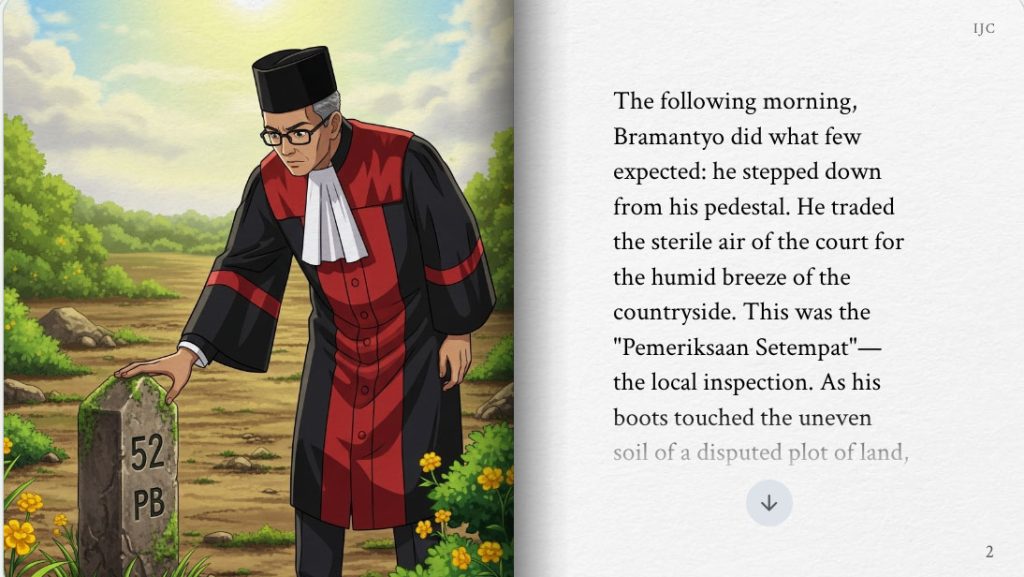
That is where Pemeriksaan Setempat local inspection enters like a necessary interruption. It is the moment the courtroom stops being a world of documents and becomes, again, a world of soil, fences, footsteps, and lived reality. A judge stepping out of the bench is not abandoning law; they are testing whether law still recognizes the ground it stands on.

Because “truth” in law has two faces. There is the formal truth, the neatly signed affidavit, the stamped certificate, the well-behaved document. And then there is material truth: the stubborn reality that refuses to adjust itself to paperwork.
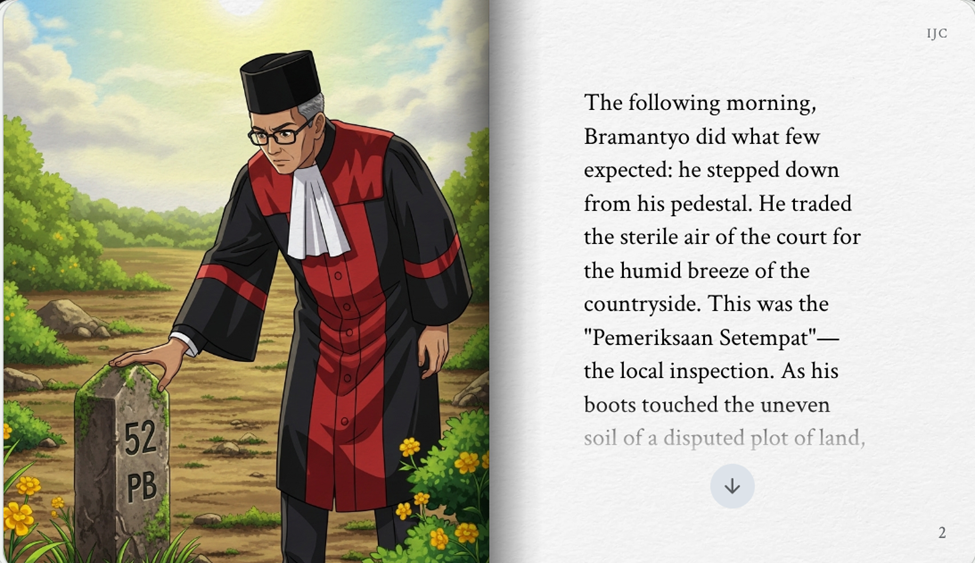
And here is the uncomfortable philosophical question: what is law worth if it cannot survive contact with the real world it governs?

Sometimes, a boundary line exists beautifully on a map but nowhere in the actual field. Sometimes, justice is perfectly written but cannot be executed. And a judgment that cannot be enforced is not just incomplete; it becomes a kind of legal fiction that the world quietly ignores.

So the judge must sometimes walk. Not symbolically, but literally.

Not to abandon objectivity but to recover reality.


2. When Distance Stops Being an Excuse: The Digital Extension of the Court’s Gaze

Of course, we do not live in an age where “walking everywhere” is always possible or even reasonable. Geography in a place as vast as Indonesia is not just a backdrop; it is an active participant in the legal process. Distance becomes delay. Cost becomes a limitation. And delay, in justice, is never neutral.

This is where technology enters not as a cold replacement of human judgment, but as its imperfect extension.

Through systems like SIP and e-Descente, the court attempts something quite ambitious: to compress distance without compressing truth. A judge may not stand in the muddy rice field or climb the hill to the disputed land, but through real-time visual tools, recordings, and digital communication, they can still “see” the terrain being contested.
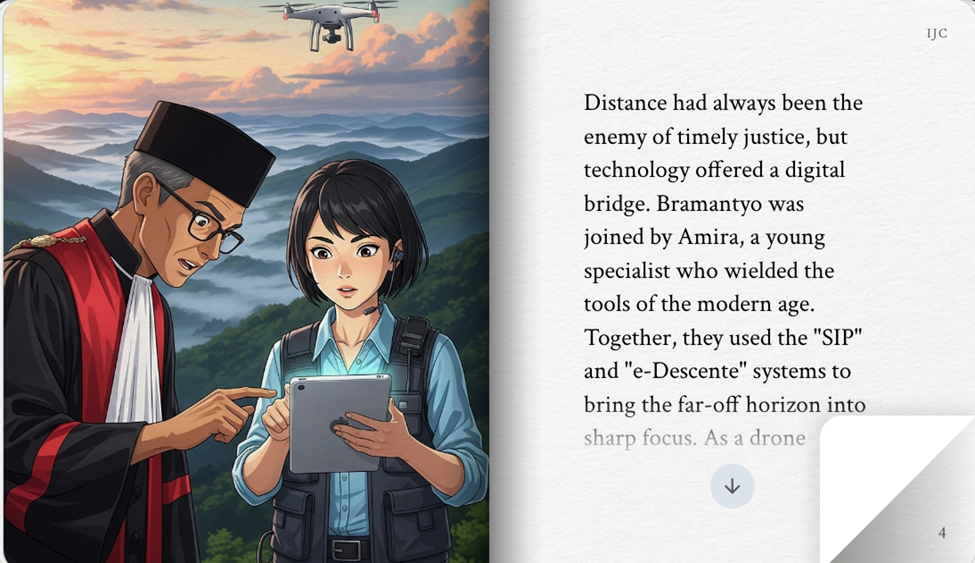
Is it the same as being there? No. And pretending otherwise would be dishonest.

But is it useless? Also no.

It is, instead, a compromise between ideal justice and possible justice.

We might even say: this is where law meets its modern philosophical dilemma: how to remain faithful to truth while operating under the constraints of time, cost, and scale.

Justice, in this sense, becomes less about absolute presence and more about credible proximity.

And yet, behind all the screens and signals, the question remains unchanged: can what we see still be trusted as reality or only as its representation?

Baca Juga  Peradilan sebagai Benteng Terakhir dalam Mengawal Negara Hukum yang Masih “Jauh Panggang dari Api

3. The Judge in the Field: A Role Between Authority and Witness

There is something quietly profound about the figure of the Hakim Komisaris, a judge sent to observe, to verify, to translate the world into something the court can understand collectively.

This is not just a procedural appointment. It is an act of institutional trust: the system saying, in effect, “we believe one of us can carry the perception of many.”

But this role also reveals something deeper about justice itself: it is never fully centralized in one mind. Even the bench must sometimes rely on eyes outside the bench.

The commissioned judge becomes a bridge between the formal authority of the courtroom and the informal complexity of the field. Between legal certainty and social ambiguity. Between what is written and what resists being written.

Their task is deceptively simple: verify, observe, report.
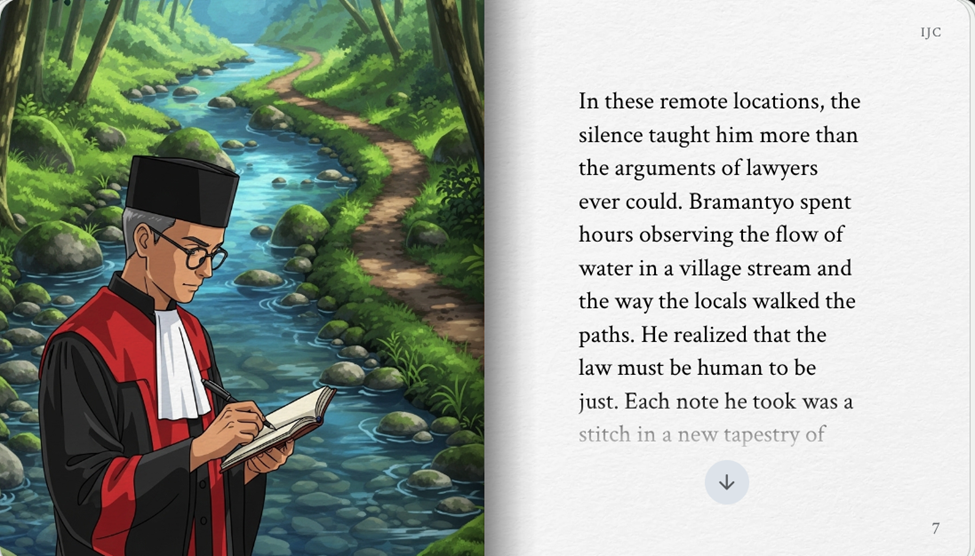
But in practice, they are doing something more delicate. They are translating reality into a form that law can safely digest without losing its essence.

And perhaps the real safeguard of justice is not only the verdict, but the credibility of how that verdict is built from fragments of lived fact.

Because if those fragments are distorted, the entire structure of judgment becomes unstable.


4. Why We Go There at All: The Ethics of Inspection

At the heart of local inspection lies a question that is not purely legal, but ethical: why not just decide everything from documents?

The answer is almost embarrassingly human.

Because documents lie quietly. Reality does not.

A court decision that cannot be executed is not just inefficient, it is socially disruptive. It creates expectations that collide with physical impossibility. It turns law into frustration.

This is why inspection matters: it is the attempt to prevent justice from becoming abstract cruelty.

There is also something deeper here. Judges do not inspect only to confirm facts. They inspect to ground their own conviction. Not emotional conviction but epistemic responsibility: the awareness that judgment must be anchored in something more than language.

Especially in sensitive matters child custody cases, for example the courtroom is often the least truthful place in the entire process. People perform. They speak strategically. They shape narratives.
But a home does not perform in the same way. A child’s environment speaks differently than a witness stand ever could.

And so justice, at its most humane, sometimes has to leave its formal architecture and enter someone’s lived space not as intrusion, but as responsibility.


5. Expanding What Counts as “Reality”

One of the most interesting shifts in modern judicial thinking is the expansion of what is even considered an “object” of inspection.

It is no longer just land or buildings.

It can be documented at their source. It can be large-scale evidence that refuses to fit in a courtroom. It can even be people especially those whose vulnerability makes courtroom presence itself a form of burden.

Baca Juga  Majelis yang Tangguh Tidak Lahir dari Laut yang Tenang – PN Wangi Wangi Melaksanakan Sidang Keliling

Here, law quietly reveals something about itself: it is slowly learning that truth is not always portable.

Sometimes truth must be visited, not summoned.

And when judges go to villages to inspect land books or witness elderly individuals in their homes, something subtle happens. The law becomes less theatrical and more human. Less about procedure as performance, and more about procedure as care.

Of course, this expansion is not without risk. It raises questions about privacy, dignity, and overreach. But it also reflects a legal system trying to answer a very old moral question in a modern way: how far should justice go to actually understand the people it judges?


6. Justice as Collaboration, Not Isolation

No court works alone, even if it likes to imagine itself as self-contained.

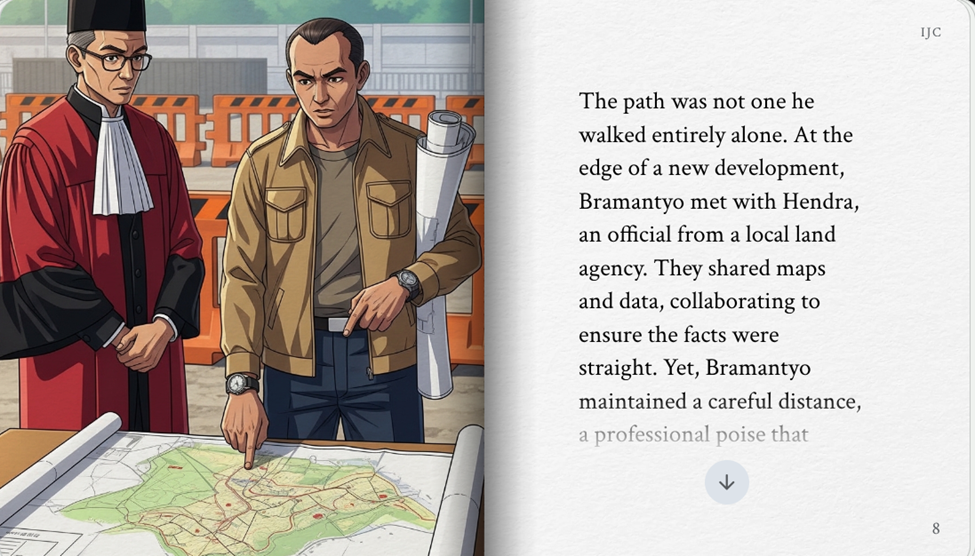
Land agencies, local officials, even security forces all become part of the ecosystem that makes inspection possible. Each brings something necessary: technical expertise, local knowledge, or safety.

But here lies an important tension: collaboration must never become dependence.

A court that relies too heavily on external institutions risks outsourcing not just information, but judgment itself. And judgment, ultimately, is what cannot be delegated.

The judge must remain the one who sees but not the one who is told what to see.

So cooperation becomes a balancing act: listening without surrendering, using expertise without losing independence.

It is, in a sense, the judicial version of walking with assistance but not being carried.


7. From Observation Back to Law: The Fragile Alchemy of Procedure

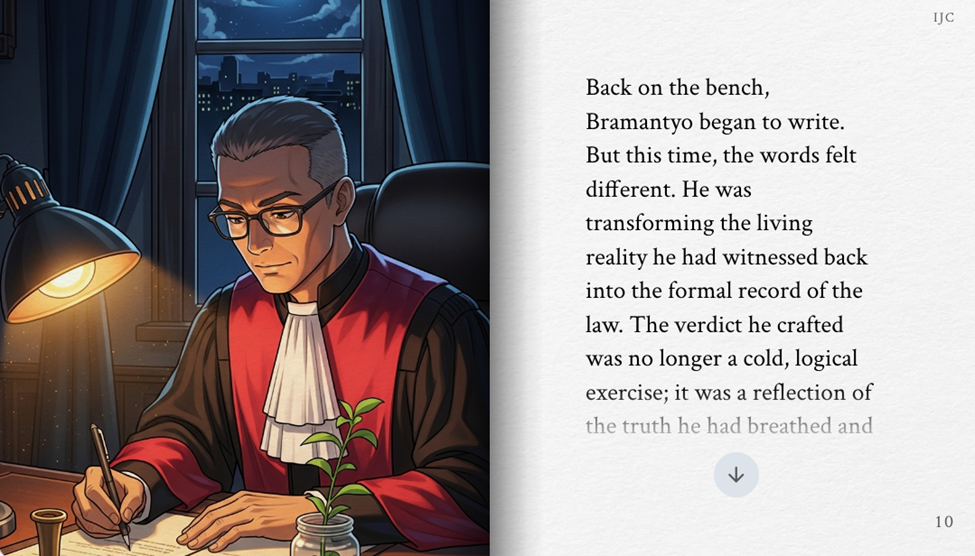
Finally, everything returns to paper.

The judge goes back to the bench. The field becomes minutes. The soil becomes a description. The lived world becomes a legal record.

This transformation is more fragile than it looks.

Because reality, once written down, can begin to harden into something less alive than what was actually seen. That is why procedure matters so much. The decree, the documentation, the formal report—these are not bureaucratic burdens. They are the safeguards that ensure experience does not dissolve into rumor.

Still, there is a quiet irony here: justice depends on transforming living reality into text, even as it constantly tries to escape the limitations of text.
And perhaps this is the deeper truth of modern law.

Justice is not a machine that produces perfect answers. It is a continuous negotiation between paper and place, between system and soil, between what is declared and what is encountered.

When judges step into the field, they are not leaving the law behind.

They are reminding it that it still belongs to the world.
Cecep Mustafa
Kontributor
Cecep Mustafa
Hakim Yustisial Badan Strajak Diklat Kumdil

Untuk Mendapatkan Berita Terbaru Suara BSDK, Follow Channel WhatsApp: SUARABSDKMARI

Hukum Indonesia Judicial Process Legal Philosophy Pemeriksaan Setempat
Leave A Reply

Share. Facebook Twitter Threads Telegram WhatsApp Copy Link

Related Posts

Dualisme Penegakan Hukum : Implikasi Asas Legalitas Dan Pengakuan  Living Law

21 June 2026 • 08:08 WIB

Membentuk Hakim Ideal: Telaah Reflektif Perspektif Turats

20 June 2026 • 19:43 WIB

Hakim Agama Antara Teks Aturan dan Rasa Keadilan

20 June 2026 • 16:00 WIB
Demo
Top Posts

Peradilan Militer Bukan Ruang Gelap: Menepis Narasi Impunitas dengan Fakta dan Akuntabilitas

9 May 2026 • 18:38 WIB

NJA India, JTC Indonesia, dan Jalan Belajar Seorang Hakim

4 May 2026 • 09:43 WIB

Bagaimana Cara Hakim dan Lembaga Peradilan menghadapi Trial By Media “Sebuah Pembelajaran dari India”

2 May 2026 • 16:11 WIB

5 Hal Menarik dalam Sistem Peradilan India yang Tidak Ditemukan di Indonesia

1 May 2026 • 13:20 WIB
Don't Miss

Dualisme Penegakan Hukum : Implikasi Asas Legalitas Dan Pengakuan  Living Law

By Muhammad Rizqi Hengki21 June 2026 • 08:08 WIB0

Orang dapat dihukum jika perbuatan yang dilakukan sudah ditentukan sebelumnya bahwa perbuatan itu dilarang dan…

Pesan Ketua Muda Pidana Pada Focus Group Discussion Tim Pokja Penyesuaian Template Penetapan, Berita Acara, Putusan & Alur Proses Perkara Pidana

21 June 2026 • 07:48 WIB

Badilum Menorehkan Prestasi Di Lingkungan Akademik Di Universitas Jember Atas Program Pengembangan Tenaga Teknis

20 June 2026 • 23:25 WIB

Prof. Harkristuti: Semua Pasal KUHP yang Diuji di MK Ditolak, Doktrin Open Legal Policy dan Judicial Restraint Jadi Dasar

20 June 2026 • 19:46 WIB
Stay In Touch
  • Facebook
  • YouTube
  • TikTok
  • WhatsApp
  • Twitter
  • Instagram
Top Trending
Demo

Recent Posts

  • Dualisme Penegakan Hukum : Implikasi Asas Legalitas Dan Pengakuan  Living Law
  • Pesan Ketua Muda Pidana Pada Focus Group Discussion Tim Pokja Penyesuaian Template Penetapan, Berita Acara, Putusan & Alur Proses Perkara Pidana
  • Badilum Menorehkan Prestasi Di Lingkungan Akademik Di Universitas Jember Atas Program Pengembangan Tenaga Teknis
  • Prof. Harkristuti: Semua Pasal KUHP yang Diuji di MK Ditolak, Doktrin Open Legal Policy dan Judicial Restraint Jadi Dasar
  • Membentuk Hakim Ideal: Telaah Reflektif Perspektif Turats

Recent Comments

  1. terbinafine adverse effects on “Dari Ruang Diklat Menuju Putusan Berkualitas: Transformasi Hakim Militer dan TUN di Era KUHAP Nasional”
  2. ketoconazole mechanism study on “Dari Ruang Diklat Menuju Putusan Berkualitas: Transformasi Hakim Militer dan TUN di Era KUHAP Nasional”
  3. toradol therapeutic uses on Debu di Atas Map Hijau
  4. terbinafine mechanism for nail fungus on Ketika Kontrak Diputus Sepihak: Pelanggaran Biasa atau Perbuatan Melawan Hukum?
  5. ketoconazole shampoo basics on Mempererat Integritas dan Spiritualitas: Rangkaian Giat Ramadan 1447 H di Pengadilan Negeri Kotabaru
Hubungi Kami

Badan Strategi Kebijakan dan Pendidikan dan Pelatihan Hukum dan Peradilan Hukum dan Peradilan
Mahkamah Agung RI

Kantor: Jl. Cikopo Selatan Desa Sukamaju, Kec. Megamendung
Bogor, Jawa Barat 16770

Kirimkan reportase berita, opini, features dan artikel lainnya ke email suarabsdk.com : 
redpelsuarabsdk@gmail.com

Telepon: (0251) 8249520, 8249522, 8249531, 8249539

Kategori
Beranda Artikel Berita Features Sosok KRITERIA TULISAN
Filsafat Roman Satire Video BALACADAS
Connect With Us
  • Instagram
  • YouTube
  • WhatsApp
Aplikasi Internal
Logo 1 Logo 2 Logo 3 Logo 3
Logo 4 Logo 4 Logo 4 Logo 5 Logo 5
Kontributor
  • Avatar photo Ahmad Junaedi
  • Avatar photo Mohammad Khairul Muqorobin
  • Avatar photo Aman
  • Avatar photo Irvan Mawardi
  • Avatar photo Cecep Mustafa
  • Avatar photo Ari Gunawan
  • Avatar photo Muamar Azmar Mahmud Farig
  • Avatar photo Khoiruddin Hasibuan
  • Avatar photo Agus Digdo Nugroho
  • Avatar photo Syailendra Anantya Prawira
  • Avatar photo Muhammad Rizqi Hengki
  • Avatar photo Muhammad Adiguna Bimasakti
  • Avatar photo Syamsul Arief
  • Avatar photo Ghesa Agnanto Hutomo
  • Avatar photo Maria Fransiska Walintukan
  • Avatar photo Jatmiko Wirawan
  • Avatar photo Taufikurrahman
  • Avatar photo Dahlan Suherlan
  • Avatar photo Yudhistira Ary Prabowo
  • Avatar photo Cik Basir
  • Avatar photo Zulfahmi
  • Avatar photo Timbul Bonardo Siahaan
  • Avatar photo Unggul Senoaji
  • Avatar photo M. Natsir Asnawi
  • Avatar photo Yoshito Siburian
  • Avatar photo Abdi Munawar Daeng Mangagang
  • Avatar photo Muhammad Hanif Ramadhan
  • Avatar photo Syihabuddin
  • Avatar photo Adji Prakoso
  • Avatar photo Anton Ahmad Sogiri
  • Avatar photo Eliyas Eko Setyo
  • Avatar photo Galang Adhe Sukma
  • Avatar photo Harun Maulana
  • Avatar photo I Gusti Lanang Ngurah Sidemen Putra
  • Avatar photo Iqbal Lazuardi
  • Avatar photo Sriti Hesti Astiti
  • Avatar photo Ahmad Syahrus Sikti
  • Avatar photo Firzi Ramadhan
  • Avatar photo Riki Perdana Raya Waruwu
  • Avatar photo Sudiyo
  • Avatar photo Tri Indroyono
  • Avatar photo Letkol Chk Agustono, S.H., M.H.
  • Avatar photo Anisa Yustikaningtiyas
  • Avatar photo Ardiansyah Iksaniyah Putra
  • Avatar photo Ganjar Prima Anggara
  • Avatar photo Jarkasih
  • Avatar photo Khoiriyah Roihan
  • Avatar photo Redaktur SuaraBSDK
  • Avatar photo Dr. Syofyan Iskandar, S.H., M.H.
  • Avatar photo Muhamad Zaky Albana
  • Avatar photo Afifah Dwiandini
  • Avatar photo Binsar Parlindungan Tampubolon
  • Avatar photo Garin Purna Sanjaya
  • Avatar photo Henri Setiawan
  • Avatar photo Irwan Rosady
  • Avatar photo Johanes
  • Avatar photo Layla Windy Puspita Sari
  • Avatar photo Marsudin Nainggolan
  • Avatar photo Marulam J Sembiring
  • Avatar photo Rafi Muhammad Ave
  • Avatar photo Teguh Setiyawan
  • Avatar photo Yasin Prasetia
  • Avatar photo Abdul Azis Ali Ramdlani
  • Avatar photo Ang Rijal Amin
  • Avatar photo Buang Yusuf
  • Avatar photo Dedi Putra
  • Avatar photo Hermanto
  • Avatar photo Indarka PP
  • Avatar photo Irene Cristna Silalahi
  • Avatar photo Nugraha Medica Prakasa
  • Avatar photo K.G. Raegen
  • Avatar photo Ria Marsella
  • Avatar photo Rikatama Budiyantie
  • Avatar photo Sahram
  • Avatar photo Siti Nadhiroh
  • Avatar photo Sugiarto
  • Avatar photo Achmad Pratomo
  • Avatar photo Audrey Kartika Putri
  • Avatar photo Bintoro Wisnu Prasojo, S.H.
  • Avatar photo Bismo Jiwo Agung
  • Avatar photo Dewi Maharati
  • Avatar photo Epri Wahyudi
  • Avatar photo Fariz Prasetyo Aji
  • Avatar photo Febby Fajrurrahman
  • Avatar photo Febry Indra Gunawan Sitorus
  • Avatar photo Fitriyel Hanif
  • Avatar photo Gerry Michael Purba
  • Avatar photo Itsnaatul Lathifah
  • Avatar photo Muhammad Amin Putra
  • Avatar photo Putra Nova A.S
  • Avatar photo Rangga Lukita Desnata
  • Avatar photo Dr. Saut Erwin Hartono A. Munthe, S.H., M.H.
  • Avatar photo Silveria Supanti
  • Avatar photo Trisoko Sugeng Sulistyo
  • Avatar photo Umar Dani
  • Avatar photo Yusuf Sodhiqin
  • Avatar photo Abiandri Fikri Akbar
  • Avatar photo Abi Zaky Azizi
  • Avatar photo Ahmad Fuad Noor Ghufron
  • Avatar photo Ahmad Faiz Shobir Alfikri
  • Avatar photo Andi Akram
  • Avatar photo Arsyawal
  • Avatar photo Bagus Partha Wijaya
  • Avatar photo Bayu Akbar Wicaksono
  • Avatar photo Cok Istri Bhagawanthi Pemayun
  • Avatar photo David Pasaribu
  • Avatar photo Dendi Sutiyoso
  • Avatar photo Edi Hudiata
  • Avatar photo Enrico Simanjuntak
  • Avatar photo Fauzan Prasetya
  • Avatar photo Fauzan Arrasyid
  • Avatar photo Fery Rochmad Ramadhan
  • Avatar photo Gerry Geovant Supranata Kaban
  • Avatar photo Hartanto Ariesyandi
  • Avatar photo Herjuna Praba Wiesesa
  • Avatar photo Idik Saeful Bahri
  • Avatar photo Khoirul Anwar
  • Avatar photo Mentari Wahyudihati
  • Avatar photo Muhamad Iqbal
  • Avatar photo Novritsar Hasintongan Pakpahan
  • Avatar photo Nugraha Wisnu Wijaya
  • Avatar photo Raden Anggara Kurniawan
  • Avatar photo Raden Heru Wibowo Sukaten
  • Avatar photo Rahimulhuda Rizki Alwi
  • Avatar photo Rahmad Ramadhan Hasibuan
  • Avatar photo Ranggi Adiwangsa Yusron
  • Avatar photo Samsul Zakaria
  • Avatar photo Tri Cahya Indra Permana
  • Avatar photo Yudhi Reksa Perdana
  • Avatar photo Abdul Ghani
  • Avatar photo Dr. Drs. H. Abdul Hadi, M.H.I.
  • Avatar photo Ach. Jufri
  • Avatar photo Achmad Fikri Oslami, S.H.I., M.H.I.
  • Avatar photo Adimas Leo Firmansah
  • Avatar photo Afif Muchshon
  • Avatar photo Agenda Citra Muhammad
  • Avatar photo Agus Suharsono
  • Avatar photo Ahmad Efendi
  • Avatar photo Ahmad Rizza Habibi
  • Avatar photo Alep Priyoambodo
  • Avatar photo Alfajar Nugraha
  • Avatar photo Anderson Peruzzi Simanjuntak
  • Avatar photo Andhika Prayoga
  • Avatar photo Andi Muhammad Galib
  • Avatar photo Andi Aswandi Tashar
  • Avatar photo Andrie Gunawan
  • Avatar photo Anggi Permana
  • Avatar photo Anna Yulina
  • Avatar photo Annisa Nur Alam
  • Avatar photo Arga Febrian
  • Avatar photo Arief Sapto Nugroho
  • Avatar photo Arie Fitriansyah
  • Avatar photo Mayor Chk Arif Dwi Prasetyo
  • Avatar photo Armansyah
  • Avatar photo Aryaniek Andayani
  • Avatar photo Ashhab Triono
  • Avatar photo Aulia Rochmani Lazuardi
  • Avatar photo Bilma Diffika
  • Avatar photo Bony Daniel
  • Avatar photo Budi Hermanto
  • Avatar photo Budi Suhariyanto
  • Avatar photo Christopher Hutapea
  • Avatar photo Deka Rachman Budihanto
  • Avatar photo Effendi Mukhtar
  • Avatar photo Egia Rasido Tarigan
  • Avatar photo Eka Sentausa
  • Avatar photo Fahri Bachmid
  • Avatar photo Fahri Gunawan Siagian
  • Avatar photo Fajar Widodo
  • Avatar photo Fatkul Mujib, S.H.I., M.H.
  • Avatar photo Febriansyah Rozarius
  • Avatar photo Friska Ariesta Aritedi
  • Avatar photo Gineng Pratidina
  • Avatar photo Hastuti
  • Avatar photo Hendro Yatmoko
  • Avatar photo Ibnu Abas Ali
  • Avatar photo I Made Sukadana
  • Indra Tua Hasangapon Harahap
  • Avatar photo Ira Soniawati
  • Avatar photo Irfan Dibar
  • Avatar photo Muhammad Irfansyah
  • Avatar photo Letkol Kum Irwan Tasri, S.H., M.H., M.Han.
  • Avatar photo Iwan Lamganda Manalu
  • Avatar photo Jusran Ipandi
  • Avatar photo Karell Mawla Ibnu Kamali
  • Avatar photo Khaimi
  • Avatar photo Khoerul Umam
  • Avatar photo Linora Rohayu
  • Avatar photo Assc. Prof. Dr. Mardi Candra, S.Ag., M.Ag., M.H., CPM., CPArb.
  • Avatar photo Marta Satria Putra
  • Avatar photo Marwan Ibrahim Piinga
  • Avatar photo Marwanto
  • Avatar photo Marzha Tweedo Dikky Paraanugrah
  • Avatar photo Maulana Aulia
  • Avatar photo Maulia Martwenty Ine
  • Avatar photo Mira Maulidar
  • Avatar photo Misbahul Anwar
  • Avatar photo Muhamad Fadillah
  • Avatar photo Muhamad Ilham Azizul Haq
  • Avatar photo Muhamad Ridwan
  • Avatar photo Muhammad Fadllullah
  • Avatar photo Muhammad Irfan Syahputra
  • Avatar photo Muhammad Muhyi Arrasyid, S.Psi.
  • Avatar photo Muhammad Bagus Tri Prasetyo
  • Avatar photo Murdian
  • Avatar photo Nadia Yurisa Adila
  • Avatar photo Nia Chasanah
  • Avatar photo Niko Wijaya
  • Avatar photo Nisrina Irbah Sati
  • Avatar photo Letkol CHK Nur Sakdi, S.H, M.H.
  • Avatar photo Nur Latifah Hanum
  • Avatar photo Pita Permatasari
  • Avatar photo H .A.S Pudjoharsoyo
  • Avatar photo Putri Pebrianti
  • Avatar photo R. Deddy Harryanto
  • Avatar photo Radityo Muhammad Harseno
  • Avatar photo Rahmi Fattah
  • Avatar photo Randy Viyatadhika
  • Avatar photo Ratih Gumilang
  • Avatar photo Reindra Jasper H. Sinaga, S.H. Hakim Pengadilan Negeri Tanjung Balai Karimun
  • Avatar photo Muh Ridha Hakim
  • Avatar photo Rifqi Qowiyul Iman
  • Avatar photo Rizal Abdurrahman
  • Avatar photo Rizal Arif Fitria
  • Avatar photo Romi Hardhika
  • Avatar photo Sandro Imanuel Sijabat
  • Avatar photo Sbong Sinarok Martin, S.H., M.H.
  • Avatar photo Selexta Apriliani
  • Avatar photo Septia Putri Riko
  • Avatar photo Septriono Situmorang
  • Avatar photo Siti Anis
  • Avatar photo Slamet Turhamun
  • Avatar photo Sobandi
  • Avatar photo Stefanus Dwi Putra Medisa
  • Avatar photo Subiyatno
  • Avatar photo Tri Baginda Kaisar Abdul Gafur
  • Avatar photo Urif Syarifudin
  • Avatar photo Wanda Rara Farezha,S.H.
  • Avatar photo Wienda Kresnantyo
  • Avatar photo Yoshelsa Wardhana
  • Avatar photo Yukiatiqa Afifah
  • Avatar photo Marsekal Muda TNI Dr. Yuwono Agung Nugroho, S.H., M.H.
Lihat semua kontributor →

Type above and press Enter to search. Press Esc to cancel.