


Close Menu
Suara BSDKSuara BSDK
  • Beranda
  • Artikel
  • Berita
  • Features
  • Sosok
  • Filsafat
  • Roman
  • Satire
  • Video
  • Liputan Khusus

Subscribe to Updates

Get the latest creative news from FooBar about art, design and business.

What's Hot

Jangan Menunggu Pelanggaran untuk Menjaga Integritas

October 12, 2026

Insiden Penyiraman Air di PN Pati, MA Tegaskan Tak Toleransi Intimidasi Hakim

October 12, 2026

Konstruksi Keadilan Restoratif pada Tahap Penyelidikan dalam KUHAP 2025: Antara Pemulihan, Praduga Tidak Bersalah, dan Kontrol Yudisial

October 12, 2026
Instagram YouTube
Suara BSDKSuara BSDK
Deskripsi Gambar
  • Beranda
  • Artikel
  • Berita
  • Features
  • Sosok
  • Filsafat
  • Roman
  • Satire
  • Video
  • Liputan Khusus
Suara BSDKSuara BSDK
Deskripsi Gambar
  • Beranda
  • Artikel
  • Berita
  • Features
  • Sosok
  • Filsafat
  • Roman
  • Satire
  • Video
  • Liputan Khusus
Home » When Innovation from the Courtroom Becomes Law

When Innovation from the Courtroom Becomes Law

Cecep MustafaBy Cecep MustafaOctober 12, 2026 · 15:43 WIB9 Mins ReadNo Comments
Share
Facebook Twitter Threads Telegram WhatsApp

One of the most striking lessons I have taken from Japan is that judicial reform does not always begin with legislation.

Sometimes, it begins with a judge sitting in a courtroom and quietly asking a very practical question:

“Is there a better way to do this?”

Around 1990, Japanese single judges handled roughly 200 cases. The traditional model relied heavily on short, approximately five-minute open-court hearings and fragmented witness examinations. A case could continue for two and a half years, not necessarily because the legal issues were exceptionally complicated, but because the procedure itself was divided into so many small pieces.

The public was beginning to notice.

By 1985, dissatisfaction with the speed of judicial proceedings was reported at 86.4 percent, while dissatisfaction concerning cost reached 84.9 percent. Yet something important remained intact: public trust in the integrity of the judiciary.

This distinction is important.
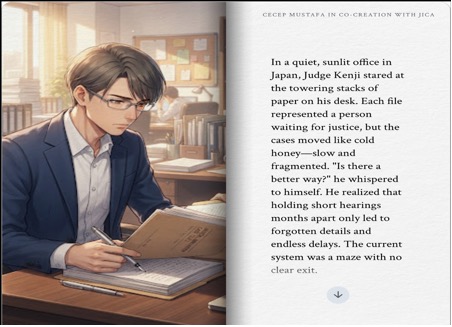
People were frustrated with how long justice took and how much it cost, but they had not necessarily lost faith in the idea of justice itself.

That is a very different problem.

If people no longer trust the institution, reform must begin by rebuilding legitimacy. But when people still trust the institution while becoming increasingly dissatisfied with its performance, perhaps the question is not whether the institution should exist, but whether it can learn to work differently.

Japan’s experience suggests that it can.

Reform Did Not Begin with a New Statute

What happened next is particularly interesting because innovation did not initially come from a grand legislative blueprint.

Frontline judges began experimenting.

They developed practices such as conducting the trial and Wakai settlement efforts within the same procedural process, together with more intensive approaches to evidence examination. These were practical responses to an increasingly obvious problem: if hearings were fragmented and evidence was examined piece by piece over years, even a competent court could become trapped in its own timetable.
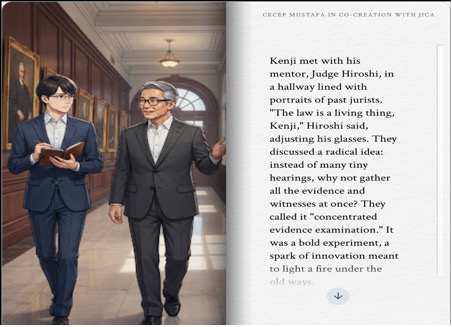
The judges were, in effect, redesigning the process from the inside.

The results were significant. These practices helped reduce the duration of proceedings to less than six months.

What interests me most here is not simply the number.

It is the direction of reform.

The innovation moved from practice to institution, rather than the other way around.

A judge tried something.

The practice demonstrated its value.

The institution learned from it.

And eventually, the law caught up.

This is perhaps one of the most valuable lessons for judicial reform elsewhere: not every useful reform needs to be invented in a policy office before it reaches the courtroom. Sometimes the courtroom is where the policy experiment should begin.

When Bottom-Up Innovation Becomes National Reform

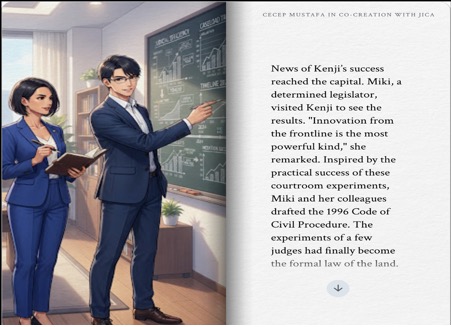
The revision of Japan’s 1996 Code of Civil Procedure eventually formalized many of these bottom-up developments.

What had initially emerged as practical innovations by frontline judges became part of the formal procedural architecture.
And the transformation did not stop with legal text.

The courts themselves began to change.

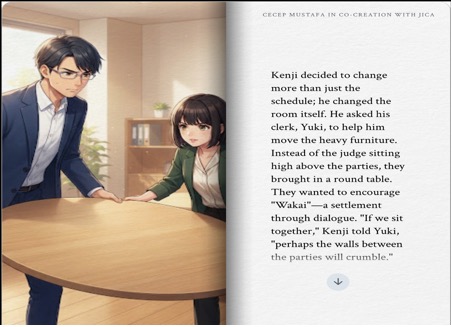
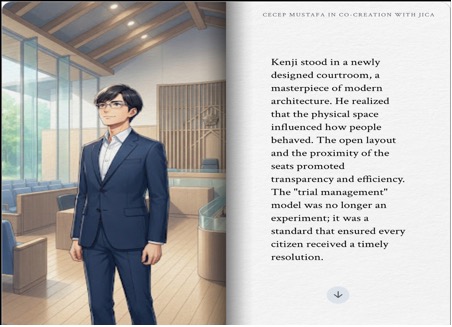
Dedicated preparation rooms were introduced. Courtrooms adopted more collaborative, round-table configurations. The physical environment increasingly reflected a different philosophy of procedure: less fragmented, more concentrated, more communicative.

This is a fascinating relationship between law, institutional practice, and physical space.

We often imagine that law changes institutions.

But institutions can also change law.

And once the law changes, it can change the physical environment in which law is practiced.

Baca Juga  Dari Skytree hingga Sensoji: Menatap Keadilan dan Refleksi Hukum dari Puncak Menara

The courtroom therefore becomes more than a room.

It becomes a reflection of the procedural philosophy of the judiciary.

A high bench, separated parties, and formal confrontation communicate one idea of justice.

A round table communicates another.

Neither piece of furniture decides a case, of course. But furniture can influence behavior. A room can tell people, even before anyone speaks, whether they are expected to confront one another or to work through a problem together.

Sometimes architecture is procedural law in silent form.

The Judge Who Knows the Case Can Also Help the Parties Settle It

Another feature of the Japanese model is particularly significant.

The judge who conducts the issue structuring and evidence examination is also involved in Wakai.

That continuity matters.
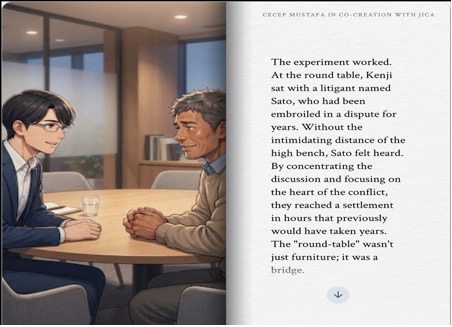
The judge has already listened to the parties. The judge has already examined the evidence. The judge understands where the factual disagreements actually lie and where the legal uncertainty remains.

When that same judge participates in settlement, a proposal is therefore not coming from someone who has merely read the case file.

It comes from someone who has experienced the case procedurally.

This can make a settlement proposal highly persuasive.

There is also a subtle philosophical point here.

Settlement does not necessarily require the judge to know less.

Sometimes, settlement becomes more meaningful precisely because the judge knows enough.

The parties may be more willing to consider compromise when they believe that the person facilitating the discussion understands the strengths and weaknesses of their respective positions.

This creates an interesting balance between judicial neutrality and judicial engagement.

The judge is not simply saying, “You should settle.”
The judge is, in effect, helping the parties understand the realistic terrain on which settlement might be possible.

What Does This Mean for Indonesia?

The Japanese experience raises an important question for Indonesian civil procedure.

Should every case move through the same procedural path?

Perhaps not.

A simple dispute and a technically complex commercial dispute do not necessarily need the same procedural architecture. Yet conventional procedure often treats them as if they do.

One possible response is to institutionalize pre-trial issue triage.

At the first hearing, the judge could classify a case into an appropriate procedural track: a default track, a fast-track trial, fast-track mediation, or intensive pre-trial issue structuring.

The objective is not to create more bureaucracy.

It is to prevent every case from becoming bureaucratic.

Evidence Should Not Take Years to Arrive

A second lesson concerns evidence.

If witnesses are examined only in small fragments, the court can spend enormous amounts of time merely reconstructing the story of the case.

An alternative would be to require parties to submit advanced written witness statements and detailed question lists, allowing oral examination to focus on the points that genuinely require clarification or challenge.

Where appropriate, witness examination could then be concentrated into intensive, single-day sessions.

The principle is straightforward:

prepare more before the hearing so that the hearing itself can become more meaningful.

This is not about rushing justice.

It is about removing unnecessary waiting from justice.

There is a difference.
One Judge, One Procedural Memory

A further reform concerns the relationship between pre-trial management and settlement.

The judge who structures the issues and examines the evidence should, within an appropriate legal framework, also be authorized to conduct evaluative Wakai.

Baca Juga  Ketua Kamar Pembinaan Lepas 14 Hakim Mengikuti Program KCCP JICA 2026: Perkuat Mediasi dan Pre-Trial demi Kepercayaan Publik

The reason is institutional memory.

A case should not have to repeatedly introduce itself to different procedural actors.

If one judge has developed a clear understanding of the dispute, that accumulated judicial knowledge can become an asset in settlement discussions.

This does not mean that the judge should impose a settlement.

Rather, the judge can use the understanding formed through the proceedings to help the parties see which points are genuinely negotiable and which are unlikely to disappear through compromise.

In this sense, judicial knowledge becomes a bridge to settlement rather than merely a preparation for judgment.

The Courtroom Itself Must Change

Finally, procedural reform cannot be separated from the physical environment of the court.

If we want judges, lawyers, and parties to engage in active oral communication, perhaps we should reconsider the traditional courtroom design.

A courtroom dominated by a high bench naturally emphasizes hierarchy.

A round-table courtroom creates a different visual relationship.

It does not eliminate judicial authority. It simply changes the way that authority is exercised and experienced.

The same principle can apply to dedicated digital pre-trial rooms, where judges and lawyers can review documents, organize evidence, identify disputed issues, and prepare the case before entering the formal hearing stage.

This is where judicial modernization becomes more than digitization.

It becomes a procedural redesign.

From Japan to Indonesia: The Value of Institutional Learning

There is a broader lesson here.

Japan’s experience demonstrates that judicial reform can emerge through a cycle of experimentation, observation, institutional learning, and legal codification.

The frontline judge becomes an innovator.

The institution becomes a learner.

The legislature or rule-maker becomes the formalizer.

And the court building itself eventually becomes part of the reform.

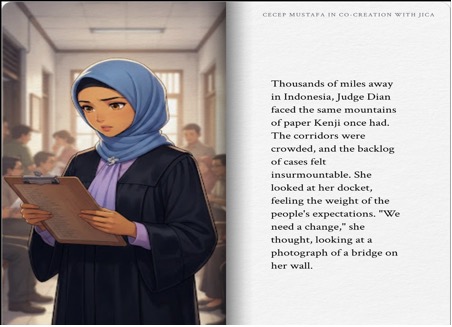
For Indonesia, this suggests that reform should not always begin by asking, “What new rule should we write?”
Sometimes the better question is:

“What are judges already doing that works, and why?”

From there, the task is to identify practices that can be tested, measured, refined, and eventually institutionalized.

Of course, not every Japanese innovation should simply be transplanted into Indonesia. Legal culture, institutional structures, caseloads, professional roles, and procedural traditions are different.

But the principle of bottom-up institutional learning is widely relevant.

The most sustainable reforms may be those that do not treat judges merely as recipients of policy.

They treat judges as sources of institutional knowledge.

And perhaps that is the deeper lesson I take from observing Japan.

Judicial reform does not always arrive from above.

Sometimes it begins quietly in a courtroom, with a judge who decides that two and a half years is too long, that five minutes is not enough, and that there must be a better way.

When that small experiment proves capable of producing better justice, the next task is not to admire it.
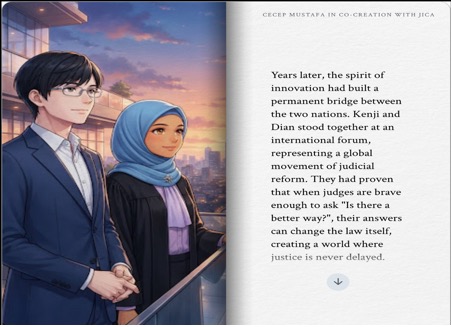
The next task is to learn from it.

Then to institutionalize it.

And eventually, to redesign the system around it.

That is how a practical innovation becomes a legal reform.

And that is how a courtroom experiment can, over time, become a transformation of the judiciary itself.
Cecep Mustafa
Kontributor
Cecep Mustafa
Hakim Yustisial Badan Strajak Diklat Kumdil

Untuk Mendapatkan Berita Terbaru Suara BSDK, Follow Channel WhatsApp: SUARABSDKMARI

Cecep Mustafa Courtroom japan Jepang JICA
Share. Facebook Twitter Threads Telegram WhatsApp Copy Link

Related Posts

Konstruksi Keadilan Restoratif pada Tahap Penyelidikan dalam KUHAP 2025: Antara Pemulihan, Praduga Tidak Bersalah, dan Kontrol Yudisial

October 12, 2026

Dari Skytree hingga Sensoji: Menatap Keadilan dan Refleksi Hukum dari Puncak Menara

October 12, 2026

Benarkah Penyimpangan Hukum Acara Termasuk Pelanggaran Etik?

October 12, 2026
Leave A Reply Cancel Reply


Demo
Top Posts

Di mana Kesaktian Pancasila Diuji?

October 1, 2026

Senja di Losari dengan Secangkir Saraba dan Sepiring Pisang Epe

September 16, 2026

Siasat Tiada Henti Penjaga Keadilan

September 13, 20261,598 Views

Titah Leviathan

September 11, 2026
Don't Miss

Jangan Menunggu Pelanggaran untuk Menjaga Integritas

By Imaniar, S.H., M.H.October 12, 20260

Internalisasi kode etik, penguatan integritas, serta penerapan pendekatan berbasis risiko untuk mencegah terjadinya pelanggaran etik…

Insiden Penyiraman Air di PN Pati, MA Tegaskan Tak Toleransi Intimidasi Hakim

October 12, 2026

Konstruksi Keadilan Restoratif pada Tahap Penyelidikan dalam KUHAP 2025: Antara Pemulihan, Praduga Tidak Bersalah, dan Kontrol Yudisial

October 12, 2026

When Innovation from the Courtroom Becomes Law

October 12, 2026 · 15:43 WIB
Stay In Touch
  • YouTube
  • TikTok
  • WhatsApp
  • Twitter
  • Instagram
Top Trending
Demo

Recent Posts

  • Jangan Menunggu Pelanggaran untuk Menjaga Integritas
  • Insiden Penyiraman Air di PN Pati, MA Tegaskan Tak Toleransi Intimidasi Hakim
  • Konstruksi Keadilan Restoratif pada Tahap Penyelidikan dalam KUHAP 2025: Antara Pemulihan, Praduga Tidak Bersalah, dan Kontrol Yudisial
  • When Innovation from the Courtroom Becomes Law
  • Dari Skytree hingga Sensoji: Menatap Keadilan dan Refleksi Hukum dari Puncak Menara

Recent Comments

  1. Abdul Mustopa on Membedah Rahasia Keberhasilan Wakai dan Chotei untuk Mediasi Indonesia
  2. H. Moh. Nasri on Kode Etik dan Pedoman Perilaku Hakim Sebagai Pembelajaran Diklat Pertama di Hari Pertama
  3. H. Moh. Nasri on Bedah Kasus di Akhir Kursus: Diklat Teknis Yudisial Dispensasi Kawin Telah Sampai pada Intinya
  4. Pandu PW on Ketika Perkawinan Tidak Tercatat : Isbat Nikah sebagai Jalan Menuju Perlindungan Hak Anak
  5. Mery Donna Tiur Pasaribu on Praperadilan dan Batas Kekuasaan
Hubungi Kami

Badan Strategi Kebijakan dan Pendidikan dan Pelatihan Hukum dan Peradilan Hukum dan Peradilan
Mahkamah Agung RI

Kantor: Jl. Cikopo Selatan Desa Sukamaju, Kec. Megamendung
Bogor, Jawa Barat 16770

Kirimkan reportase berita, opini, features dan artikel lainnya ke email suarabsdk.com : 
redpelsuarabsdk@gmail.com

Telepon: (0251) 8249520, 8249522, 8249531, 8249539

Kategori
Beranda Artikel Berita Features Sosok KRITERIA TULISAN
Filsafat Roman Satire Video BALACADAS
Connect With Us
  • Instagram
  • YouTube
  • WhatsApp
Aplikasi Internal
Logo 1 Logo 2 Logo 3 Logo 3 Logo 5
Logo 4 Logo 4 Logo 4 Logo 5 Logo 5 Logo 5
Kontributor
  • Avatar photo Ahmad Junaedi
  • Avatar photo Mohammad Khairul Muqorobin
  • Avatar photo Aman
  • Avatar photo Irvan Mawardi
  • Avatar photo Cecep Mustafa
  • Avatar photo Ari Gunawan
  • Avatar photo Khoiruddin Hasibuan
  • Avatar photo Yudhistira Ary Prabowo
  • Avatar photo Muamar Azmar Mahmud Farig
  • Avatar photo Syailendra Anantya Prawira
  • Avatar photo Ghesa Agnanto Hutomo
  • Avatar photo Muhammad Rizqi Hengki
  • Avatar photo Agus Digdo Nugroho
  • Avatar photo Syamsul Arief
  • Avatar photo Johanes
  • Avatar photo Timbul Bonardo Siahaan
  • Avatar photo Dahlan Suherlan
  • Avatar photo Muhammad Adiguna Bimasakti
  • Avatar photo Jatmiko Wirawan
  • Avatar photo Cik Basir
  • Avatar photo Syihabuddin
  • Avatar photo Taufikurrahman
  • Avatar photo Zulfahmi
  • Avatar photo Maria Fransiska Walintukan
  • Avatar photo Unggul Senoaji
  • Avatar photo Anton Ahmad Sogiri
  • Avatar photo Abdi Munawar Daeng Mangagang
  • Avatar photo Adji Prakoso
  • Avatar photo M. Natsir Asnawi
  • Avatar photo Yoshito Siburian
  • Avatar photo Sriti Hesti Astiti
  • Avatar photo Abdul Azis Ali Ramdlani
  • Avatar photo Iqbal Lazuardi
  • Avatar photo Galang Adhe Sukma
  • Avatar photo Harun Maulana
  • Avatar photo Layla Windy Puspita Sari
  • Avatar photo Muhammad Hanif Ramadhan
  • Avatar photo Ahmad Syahrus Sikti
  • Avatar photo Anisa Yustikaningtiyas
  • Avatar photo I Gusti Lanang Ngurah Sidemen Putra
  • Avatar photo Binsar Parlindungan Tampubolon
  • Avatar photo Bintoro Wisnu Prasojo
  • Avatar photo Eliyas Eko Setyo
  • Avatar photo Firzi Ramadhan
  • Avatar photo Ganjar Prima Anggara
  • Avatar photo Jarkasih
  • Avatar photo Sudiyo
  • Avatar photo Febby Fajrurrahman
  • Avatar photo Garin Purna Sanjaya
  • Avatar photo Itsnaatul Lathifah
  • Avatar photo Marulam J Sembiring
  • Avatar photo Tri Indroyono
  • Avatar photo Letkol Chk Agustono, S.H., M.H.
  • Avatar photo Ardiansyah Iksaniyah Putra
  • Avatar photo Buang Yusuf
  • Avatar photo Ferdian Permadi
  • Avatar photo Irene Cristna Silalahi
  • Avatar photo Marsudin Nainggolan
  • Avatar photo Maulana Aulia
  • Avatar photo Riki Perdana Raya Waruwu
  • Avatar photo Siti Nadhiroh
  • Avatar photo Dr. Syofyan Iskandar, S.H., M.H.
  • Avatar photo Muhamad Zaky Albana
  • Avatar photo Afifah Dwiandini
  • Avatar photo Henri Setiawan
  • Avatar photo Irwan Rosady
  • Avatar photo Khoiriyah Roihan
  • Avatar photo Redaktur SuaraBSDK
  • Avatar photo Yasin Prasetia
  • Avatar photo Audrey Kartika Putri
  • Avatar photo Eddy Daulatta Sembiring
  • Avatar photo Fauzan Prasetya
  • Avatar photo Fitriyel Hanif
  • Avatar photo Gerry Michael Purba
  • Avatar photo K.G. Raegen
  • Avatar photo Rafi Muhammad Ave
  • Avatar photo Rangga Lukita Desnata
  • Avatar photo Rikatama Budiyantie
  • Avatar photo Sugiarto
  • Avatar photo Teguh Setiyawan
  • Avatar photo Achmad Fikri Oslami
  • Avatar photo Ahmad Fuad Noor Ghufron
  • Avatar photo Achmad Nurul Huda
  • Avatar photo Andro Riski Pradipta
  • Avatar photo Anggi Permana
  • Avatar photo Ang Rijal Amin
  • Avatar photo Armansyah
  • Avatar photo Cok Istri Bhagawanthi Pemayun
  • Avatar photo Dedi Putra
  • Avatar photo Dewi Maharati
  • Avatar photo Gerry Geovant Supranata Kaban
  • Avatar photo Herjuna Praba Wiesesa
  • Avatar photo Hermanto
  • Avatar photo Indarka PP
  • Avatar photo Muhamad Fadillah
  • Avatar photo Muhammad Zuchri Nasuha Lubis
  • Avatar photo Nugraha Medica Prakasa
  • Avatar photo Ria Marsella
  • Avatar photo Sadana
  • Avatar photo Sahram
  • Avatar photo Saut Erwin Hartono A. Munthe
  • Avatar photo Silveria Supanti
  • Avatar photo Yusuf Sodhiqin
  • Avatar photo Achmad Pratomo
  • Avatar photo Dr. H. Achmad Setyo Pudjoharsoyo., SH., M.Hum
  • Avatar photo Agenda Citra Muhammad
  • Avatar photo Ahmad Faiz Shobir Alfikri
  • Avatar photo Arie Fitriansyah
  • Avatar photo Bismo Jiwo Agung
  • Avatar photo David Pasaribu
  • Avatar photo Edi Hudiata
  • Avatar photo Epri Wahyudi
  • Avatar photo Fajar Widodo
  • Avatar photo Fariz Prasetyo Aji
  • Avatar photo Fauzan Arrasyid
  • Avatar photo Fauzia Rohmah
  • Avatar photo Febry Indra Gunawan Sitorus
  • Avatar photo Hartanto Ariesyandi
  • Avatar photo Mardi Candra
  • Avatar photo Muhammad Irfan Syahputra
  • Avatar photo Muhammad Amin Putra
  • Avatar photo Niko Wijaya
  • Avatar photo Putra Nova A.S
  • Avatar photo Raden Heru Wibowo Sukaten
  • Avatar photo Rizal Arif Fitria
  • Avatar photo Trisoko Sugeng Sulistyo
  • Avatar photo Umar Dani
  • Avatar photo Wahyu Budi Santoso
  • Avatar photo Abdul Hadi
  • Avatar photo Abiandri Fikri Akbar
  • Avatar photo Abi Zaky Azizi
  • Avatar photo Adimas Leo Firmansah
  • Avatar photo Ahmad Farhan Subhi
  • Avatar photo Andi Akram
  • Avatar photo Arsyawal
  • Avatar photo Ashhab Triono
  • Avatar photo Aulia Rochmani Lazuardi
  • Avatar photo Bagus Partha Wijaya
  • Avatar photo Bagus Sujatmiko
  • Avatar photo Bayu Akbar Wicaksono
  • Avatar photo Chandra Khoirunnas
  • Avatar photo Cuhandi
  • Avatar photo Deka Rachman Budihanto
  • Avatar photo Dendi Sutiyoso
  • Avatar photo Dharma Setiawan Negara
  • Avatar photo Dhea Sutaryana
  • Avatar photo Enrico Simanjuntak
  • Avatar photo Fahri Gunawan Siagian
  • Avatar photo Fauziah Rahmah
  • Avatar photo Fery Rochmad Ramadhan
  • Avatar photo Idik Saeful Bahri
  • Avatar photo Karell Mawla Ibnu Kamali
  • Avatar photo Khalilurrahman
  • Avatar photo Khoirul Anwar
  • Avatar photo Mentari Wahyudihati
  • Avatar photo Misbah
  • Avatar photo Muhamad Ridwan
  • Avatar photo Muhamad Iqbal
  • Avatar photo Nia Chasanah
  • Avatar photo Novritsar Hasintongan Pakpahan
  • Avatar photo Nugraha Wisnu Wijaya
  • Avatar photo Raden Anggara Kurniawan
  • Avatar photo Rahimulhuda Rizki Alwi
  • Avatar photo Rahmad Ramadhan Hasibuan
  • Avatar photo Ranggi Adiwangsa Yusron
  • Avatar photo Muhammad Rijaldy Alwy
  • Avatar photo Rohim
  • Avatar photo Romi Hardhika
  • Avatar photo Samsul Zakaria
  • Avatar photo Satria Perdana
  • Avatar photo Siti Anis
  • Avatar photo Tri Cahya Indra Permana
  • Avatar photo Wilmar Ibni Rusydan
  • Avatar photo Yudhi Reksa Perdana
  • Avatar photo Abdul Ghani
  • Avatar photo Ach. Jufri
  • Avatar photo Achmad Cholil
  • Avatar photo Afif Muchshon
  • Avatar photo Agus Suharsono
  • Avatar photo Ahmad Efendi
  • Avatar photo Ahmad Hodri
  • Avatar photo Ahmad Rikfi Fuadi
  • Avatar photo Ahmad Rizza Habibi
  • Avatar photo Aidil Akbar
  • Avatar photo Alep Priyoambodo
  • Avatar photo Alfajar Nugraha
  • Avatar photo Andi Amirah Humairah Ya'kub
  • Avatar photo Anderson Peruzzi Simanjuntak
  • Avatar photo Andhika Prayoga
  • Avatar photo Andi Muhammad Galib
  • Avatar photo Andi Aswandi Tashar
  • Avatar photo Andrie Gunawan
  • Avatar photo Anggiyansyah Nurmanta
  • Avatar photo Anna Yulina
  • Avatar photo Annisa Nur Alam
  • Avatar photo Arga Febrian
  • Avatar photo Ariansyah
  • Avatar photo Arief Sapto Nugroho
  • Avatar photo Mayor Chk Arif Dwi Prasetyo
  • Avatar photo Aryaniek Andayani
  • Avatar photo Bella Puspitawati
  • Avatar photo Bellina Gamelia Sembiring Kembaren
  • Avatar photo Bilma Diffika
  • Avatar photo Bony Daniel
  • Avatar photo Budi Hermanto
  • Avatar photo Budi Suhariyanto
  • Avatar photo Chandra
  • Avatar photo Christopher Hutapea
  • Avatar photo Daniel H. Napitupulu
  • Avatar photo Daniel Saputra
  • Dedi Wigandi
  • Avatar photo Djoni Witanto
  • Avatar photo Effendi Mukhtar
  • Avatar photo Egia Rasido Tarigan
  • Avatar photo Eka Sentausa
  • Avatar photo Enos Syahputra Sipahutar, S.H., M.H.
  • Avatar photo Dr. Fahmiron
  • Avatar photo Fahri Bachmid
  • Avatar photo Fahri Soleh
  • Avatar photo Fakhir Tashin Baaj
  • Avatar photo Farhan Al Faris
  • Avatar photo Fatkul Mujib, S.H.I., M.H.
  • Avatar photo Dr. Fauziati, S.Ag., M.Ag
  • Avatar photo Febriansyah Rozarius
  • Avatar photo Friska Ariesta Aritedi
  • Avatar photo Gineng Pratidina
  • Avatar photo Hanry Ichfan Adityo
  • Avatar photo Peltu Hartono
  • Avatar photo Hastuti
  • Avatar photo Hendro Yatmoko
  • Avatar photo Ibnu Abas Ali
  • Avatar photo Ida Masnita Sigalingging
  • Avatar photo I Made Sukadana
  • Avatar photo Imaniar, S.H., M.H.
  • Indra Tua Hasangapon Harahap
  • Avatar photo Ira Soniawati
  • Avatar photo Irfan Dibar
  • Avatar photo Muhammad Irfansyah
  • Avatar photo Letkol Kum Irwan Tasri, S.H., M.H., M.Han.
  • Avatar photo Iwan Lamganda Manalu
  • Avatar photo Jerymia Seky Tanaem
  • Avatar photo Jimmy Maruli Alfian
  • Avatar photo Jusran Ipandi
  • Avatar photo Khaimi
  • Avatar photo Khoerul Umam
  • Avatar photo Linora Rohayu
  • Avatar photo Made Passek Reza Swandira
  • Avatar photo Marta Satria Putra
  • Avatar photo Marwan Ibrahim Piinga
  • Avatar photo Marwanto
  • Avatar photo Marzha Tweedo Dikky Paraanugrah
  • Avatar photo Maulia Martwenty Ine
  • Avatar photo Mira Maulidar
  • Avatar photo Misbahul Anwar
  • Avatar photo Muhamad Ilham Azizul Haq
  • Avatar photo Muhamad Saptari
  • Avatar photo Muhammad Fadllullah
  • Avatar photo Muhammad Muhyi Arrasyid, S.Psi.
  • Avatar photo Muhammad Bagus Tri Prasetyo
  • Avatar photo Muhammad Yusuf
  • Avatar photo Murdian
  • Avatar photo Nadia Yurisa Adila
  • Avatar photo Nisrina Irbah Sati
  • Avatar photo Letkol CHK Nur Sakdi, S.H, M.H.
  • Avatar photo Nur Latifah Hanum
  • Avatar photo Pandu Pradana Wicaksono, S.H.
  • Avatar photo Piput Milandsari
  • Avatar photo Pita Permatasari
  • Avatar photo H .A.S Pudjoharsoyo
  • Avatar photo Putri Pebrianti
  • Avatar photo R. Deddy Harryanto
  • Avatar photo Radityo Muhammad Harseno
  • Avatar photo Rahmi Fattah
  • Avatar photo Randy Viyatadhika
  • Avatar photo Ratih Gumilang
  • Avatar photo Reindra Jasper H. Sinaga, S.H. Hakim Pengadilan Negeri Tanjung Balai Karimun
  • Avatar photo Reza Kresna Adipraya
  • Avatar photo Peltu Ricko Rikardo, S.H
  • Avatar photo Muh Ridha Hakim
  • Avatar photo Rifqi Qowiyul Iman
  • Avatar photo Rizal Abdurrahman
  • Avatar photo Penulis adalah Filsuf - Analis Politik dan Kebangsaan
  • Avatar photo Rudi Hartoyo
  • Avatar photo Sandro Imanuel Sijabat
  • Avatar photo Sbong Sinarok Martin, S.H., M.H.
  • Avatar photo Selexta Apriliani
  • Avatar photo Septia Putri Riko
  • Avatar photo Septriono Situmorang
  • Avatar photo Slamet Turhamun
  • Avatar photo Sobandi
  • Avatar photo Sri Nurmina Sari
  • Avatar photo Stefanus Dwi Putra Medisa
  • Avatar photo Subiyatno
  • Avatar photo Sugiri Wiryandono
  • Avatar photo Teddy Lahati
  • Avatar photo Tri Baginda Kaisar Abdul Gafur
  • Avatar photo Urif Syarifudin
  • Avatar photo Wanda Rara Farezha,S.H.
  • Avatar photo Wienda Kresnantyo
  • Avatar photo Willsa Suharyadi
Lihat semua kontributor →

Type above and press Enter to search. Press Esc to cancel.